

PVC Shadecloth Combo vs Sunshade Combo – What’s the Difference?
A shadecloth combo is designed to protect horses from the harsh Australian sun while keeping them cool and comfortable. Both the PVC Shadecloth Combo and the Sunshade Combo provide excellent UV protection, but they’re built for slightly different needs.
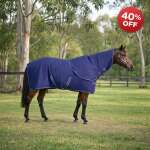
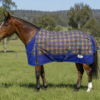
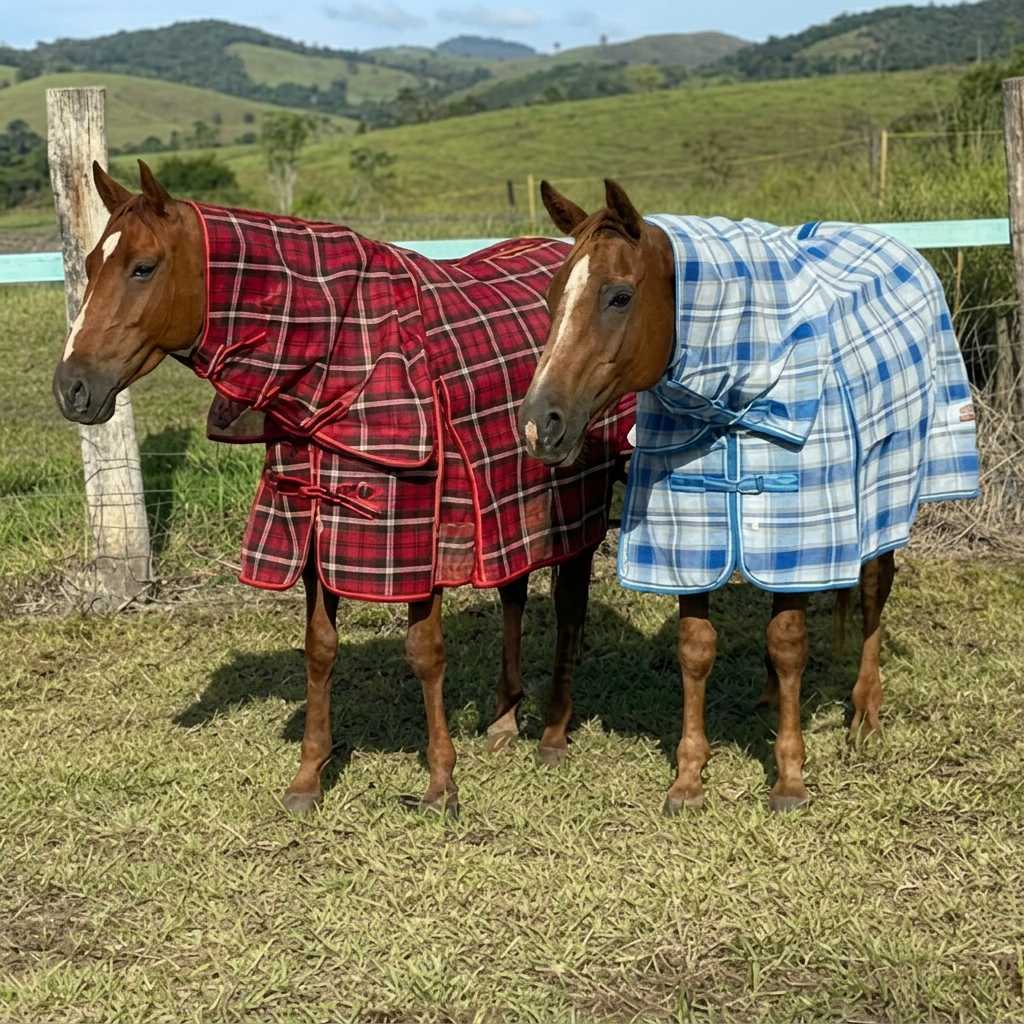
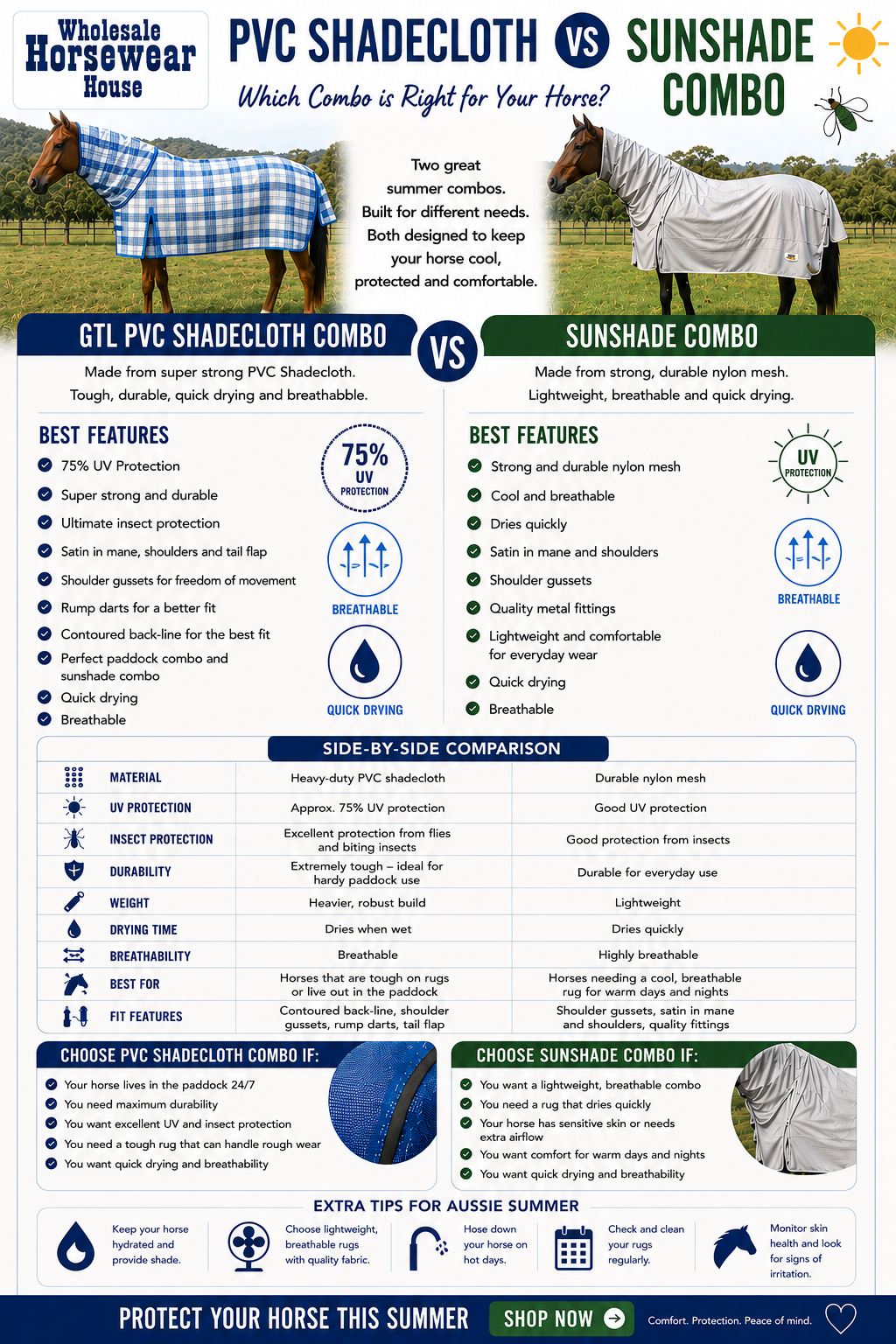
The PVC Shadecloth Combo is made from heavy-duty PVC shadecloth, making it the tougher option for horses that are hard on rugs or spend long periods in the paddock. It provides approximately 75% UV protection, helping reduce coat bleaching, protect pink skin, and keep horses cooler during summer. It also offers excellent insect protection thanks to its tight shadecloth weave.
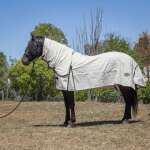
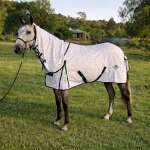
The Sunshade Combo is made from lightweight, durable nylon mesh. It’s softer, dries quickly after rain or washing, and is ideal for horses that need a cool, breathable rug for everyday summer wear. While it still provides sun protection, its lighter construction makes it a great choice for horses that don’t require the extra durability of PVC shadecloth.
PVC Shadecloth Combo
- Heavy-duty PVC shadecloth
- Approximately 75% UV protection
- Excellent protection from flies and biting insects
- Extremely durable for paddock use
- Satin-lined shoulders and mane to reduce rubbing
- Shoulder gussets and rump darts for improved fit
- Contoured backline and generous tail flap
Sunshade Combo
- Lightweight, durable nylon mesh
- Cool and highly breathable
- Quick drying
- Satin-lined shoulders and mane
- Shoulder gussets for freedom of movement
- Quality metal fittings
- Comfortable for everyday summer use
Which one should you choose?
Choose the GTL PVC Shadecloth Combo if your horse spends all day in the paddock, is tough on rugs, or needs maximum UV protection with added insect defence.
Choose the Sunshade Combo if you want a lightweight, breathable summer rug that dries quickly and keeps your horse comfortable through warm days and nights.
Both are excellent Australian summer rugs—the right choice simply depends on whether maximum durability and UV protection or lightweight comfort and quick drying is your priority.
What Each One Actually Does — PVC Shadecloth vs Sunshade
Australian summer brings intense heat, harsh UV and plenty of insects, so choosing the right rug comes down to how much durability, UV protection and airflow your horse needs.
The GTL PVC Shadecloth Combo is made from a heavy-duty PVC shadecloth weave that provides approximately 75% UV protection while remaining breathable and quick drying. The dense shadecloth also helps reduce insect irritation by acting as a physical barrier, making it ideal for horses that spend long hours in the paddock or are tough on rugs. It helps reduce sunburn on pink skin, minimises coat bleaching and keeps dark-coated horses cooler under the Australian summer sun.
The Sunshade Combo is made from lightweight, durable nylon mesh that is designed for maximum comfort in hot weather. It offers good UV protection while allowing excellent airflow and drying quickly after rain or washing. Its softer, lighter construction makes it ideal for everyday summer wear, especially for horses that need a cool, breathable rug without the heavier feel of PVC shadecloth.
Both rugs are designed for Australian conditions—they simply suit different horses. Choose the PVC Shadecloth Combo if durability, higher UV protection and rugged paddock performance are your priorities. Choose the Sunshade Combo if you want the lightest, coolest option for everyday summer comfort.
The Right Rug for the Right Horse
Australian summers are long, hot and unforgiving, but not every horse needs the same type of protection. The choice between the GTL PVC Shadecloth Combo and the Sunshade Combo comes down to your horse’s lifestyle, environment and how hard they are on their rugs.
The GTL PVC Shadecloth Combo is the premium choice for horses that spend long hours in the paddock or need maximum durability. Its heavy-duty PVC shadecloth provides approximately 75% UV protection, helping reduce sunburn on pink skin, minimise coat bleaching and keep horses cooler by reflecting a large portion of the sun’s harmful rays. Despite its strength, the fabric remains breathable and quick drying, making it ideal for Australia’s harsh summer conditions.
The Sunshade Combo offers a lighter, softer alternative for everyday summer use. Made from durable nylon mesh, it delivers excellent airflow, dries quickly after rain or washing, and provides comfortable UV protection for horses that don’t require the extra toughness of PVC shadecloth. Its lightweight construction makes it ideal for horses that appreciate maximum comfort during warm days and nights.
Whether your horse is a show horse you want to keep looking its best, a grey or paint with sensitive skin, or simply spends every day in the Australian sun, both rugs provide reliable summer protection. Choose the PVC Shadecloth Combo for rugged paddock performance and maximum UV defence, or the Sunshade Combo for lightweight comfort and everyday wear.
Sunshade vs fly mesh — feature by feature
Pick the row that matters most for your horse this summer
The Lightweight Choice — When Comfort is the Priority
Not every horse needs the toughest rug on the market. For many horses, comfort, airflow and everyday wear are the most important factors during an Australian summer.
The Sunshade Combo is designed for horses that benefit from a lighter, softer rug without sacrificing protection from the summer sun. Made from durable nylon mesh, it provides excellent airflow, dries quickly after rain or washing, and is comfortable enough to wear all day through the warmer months.
The horses that suit a Sunshade Combo best include:
- Horses with sensitive skin — The lightweight fabric sits comfortably against the coat while allowing maximum airflow on hot days.
- Show horses — Helps protect the coat from bleaching while keeping the horse clean and comfortable between events.
- Older horses or horses in work — A lighter rug places less weight on the horse while still providing reliable summer protection.
- Horses in moderate paddock conditions — Perfect for horses that don’t regularly damage rugs but still need everyday protection from the Australian sun.
The GTL Sunshade Combo is ideal for owners looking for a lightweight, breathable summer rug that offers excellent comfort and quick drying performance. It provides reliable UV protection while remaining cool enough for warm Australian days, making it the perfect everyday choice for many horses.
For horses that are harder on their rugs, spend all day in large paddocks or simply need maximum durability, the GTL PVC Shadecloth Combo remains the premium option, combining 75% UV protection with a heavy-duty PVC shadecloth construction built for rugged Australian conditions.
The Aussie summer rug cycle
One horse, two combos, three time-windows — this is how most owners run it
By day
PVC Shadecloth
From sunrise through the hottest part of the afternoon. Blocks 75% UV, keeps the coat from fading, stops sunburn on pink skin. Strip when the sun drops.
By evening
Sunshade
From late afternoon through to morning feed. Midges and mosquitoes peak at dawn and dusk — this is when bites happen. Mesh blocks the bugs without trapping heat.
Through fly season
Both, rotated
Buffalo fly belt or heavy sweet itch country — rotate the sunshade on by day, mesh on by night, six months of the year. The horse never goes uncovered.
The GTL PVC Shadecloth Combo — how it’s built
The GTL PVC Shadecloth Combo is the in-house WHWH design we’ve refined over the years since 2005. The construction is built around six specific choices, every one of which solves a problem we saw in earlier shadecloth combos on the market:
- 75% UV-block PVC shadecloth fabric — the same family of weave you see on commercial nursery shadecloth, in a horse-rug-weight grade. Blocks three-quarters of incoming UV while still breathing.
- Contoured backline — sits on the spine the way a fitted rug should, instead of bunching across the shoulders or sagging at the croup.
- Rump darts — stitched darts at the rump that follow the horse’s shape, keeping the rear of the rug from lifting in wind.
- Satin-lined mane and shoulder — the inside of the neck and shoulder is satin, which slides over the coat without pulling mane hair out or rubbing the shoulder bare.
- Full chest gusset — deep gusset at the chest so the horse can lower its head to graze and lift it to look around without the rug yanking against the wither.
- Sizing from 4′6 to 7′0 — deeper size range than most competitors, because shadecloth combos in the wrong size rub the shoulder raw in a week.
Around $88 retail, free Australia-wide postage on orders over $500. We also stock the matching PVC Shadecloth Rug for horses who don’t need or won’t tolerate the neck cover, and the Sunshade Combo for horses that need a touch more body weight.
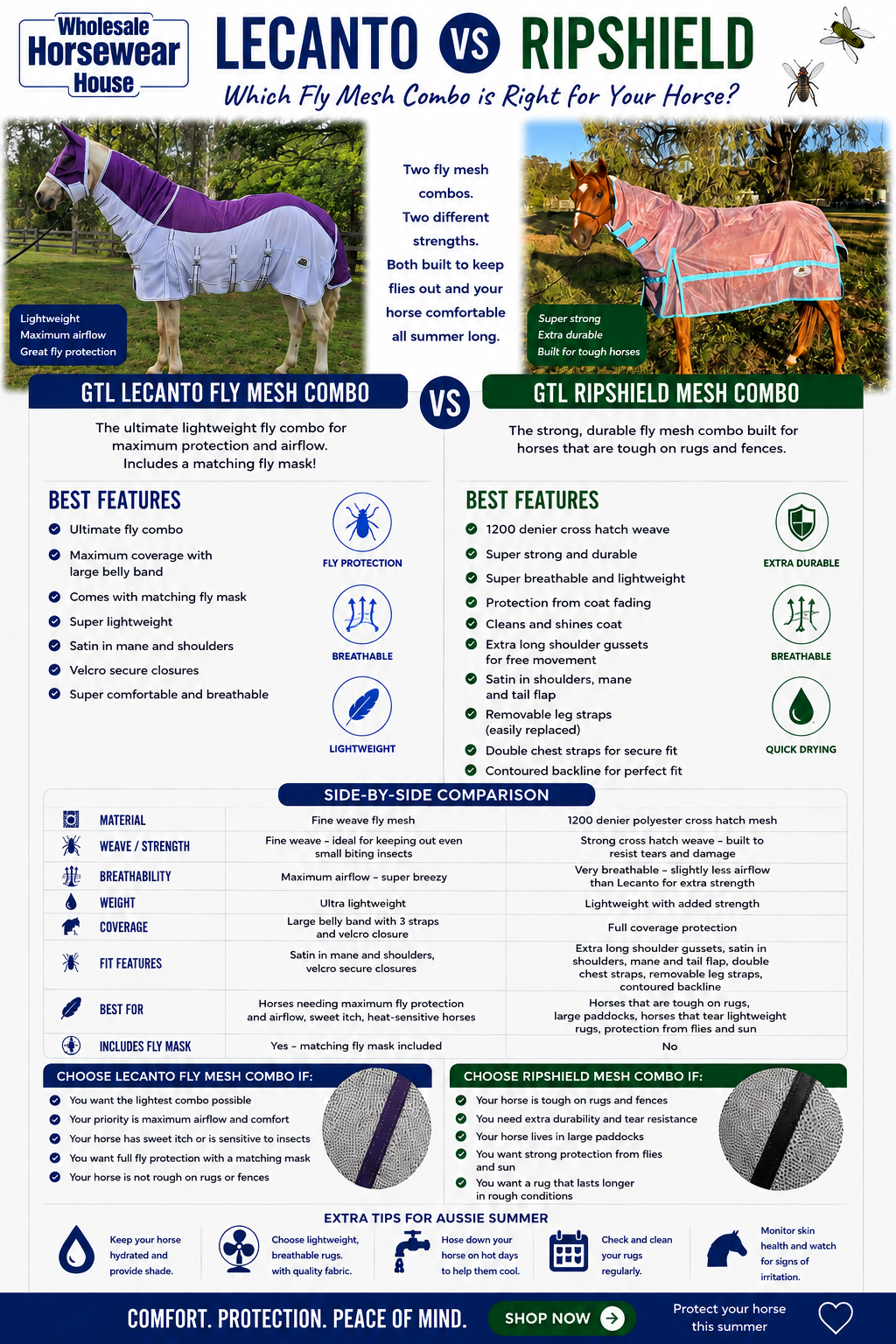
Lecanto vs Ripshield — Which Fly Combo is Right for Your Horse?
Both the GTL Lecanto Fly Mesh Combo and the Ripshield Mesh Combo are designed to keep horses comfortable through the Australian summer by providing excellent airflow and protection from biting insects. The biggest difference is whether you need the lightest possible fly rug or extra durability for horses that are hard on their rugs.
GTL Lecanto Fly Mesh Combo
The Lecanto Fly Mesh Combo is the ultimate lightweight summer fly rug. Its breathable mesh construction allows maximum airflow to help keep horses cool while providing excellent protection from flies and other biting insects.
Designed for comfort, it features satin lining through the mane and shoulders to help minimise rubbing, along with a large belly flap secured by three straps and Velcro closures for maximum insect coverage. Every rug also comes complete with a matching fly mask, providing head-to-tail protection.
Best suited for:
- Horses needing maximum fly protection
- Horses prone to sweet itch or insect irritation
- Warm, humid conditions where airflow is essential
- Owners wanting complete fly protection with a matching fly mask included
GTL Ripshield Mesh Combo
The Ripshield Mesh Combo is built for horses that need a stronger, more durable summer rug without sacrificing breathability. Its 1200 denier polyester cross-hatch weave is designed to help control and limit tears, making it an excellent choice for horses that are rough on rugs or spend long periods in the paddock.
The breathable mesh fabric helps protect against insects while reducing coat fading, and the satin-lined shoulders, mane and tail flap help keep the coat smooth and minimise rubbing. Extra-long shoulder gussets provide excellent freedom of movement, while removable leg straps, double chest straps and a contoured backline create a secure, comfortable fit.
Best suited for:
- Horses that are hard on rugs
- Horses living in larger paddocks
- Owners wanting extra durability
- Horses needing protection from insects and summer sun while maintaining a healthy, shiny coat
Which one should you choose?
Choose the Lecanto Fly Mesh Combo if your priority is maximum fly protection, lightweight comfort and complete coverage, including the large belly flap and matching fly mask.
Choose the Ripshield Mesh Combo if you need greater durability without giving up breathability. Its stronger cross-hatch mesh construction is ideal for horses that regularly test the limits of their rugs while still offering excellent comfort and insect protection.
Both rugs are designed specifically for Australian summers—the choice comes down to whether you value the lightest possible fly rug or extra strength for tougher paddock conditions.
Picking your summer rug stack — three questions
Most rug guides walk through every weight band and every fabric and leave the buyer more confused than they started. Three questions get most horse owners to the right call:
Three questions, one summer rug plan
Answer all three honestly and the right combo (or combos) become obvious
Question 1
What’s the bigger threat — sun or bugs?
Grey, pink, dark-coated or show horse → sunshade. Sweet-itch, NQ buffalo fly belt, eastern March-fly country → mesh. Both → both.
Question 2
Day-only paddock or 24/7?
Day-only → one rug is enough. 24/7 paddock through summer → swap sunshade by day and mesh by night so the horse is always covered.
Question 3
How rough is your horse on rugs?
Gentle paddock horse → fine mesh. Tears rugs on fences
Related reading from the Horse Rugs guide
What weight horse rug do I need? An Australian climate guide
Light, medium, heavy or arctic — the plain-English weight guide for Australian conditions, broken down by climate zone.
Synthetic vs canvas (jute) horse rugs — which fabric for your horse?
The Stradbroke Jute is a heritage canvas-mesh classic for NQ summer. Here’s when canvas beats synthetic and when it doesn’t.
Best horse rugs for sensitive-skinned horses
Sweet itch, Queensland itch, and horses with reactive skin — the rug choices that actually help.
Horse rug vs combo — when do you need the neck?
Neck coverage is the difference between a rug and a combo. Here’s when it matters for summer cover.
How to measure your horse for a rug
Wrong size = shoulder rub in a week. The WHWH method for measuring up your horse, step by step.
Sources
Guidance in this article reflects the typical experience of Australian horse owners across the WHWH customer base and is intended as general information. UV sensitivity, fly pressure, and sweet-itch reactions vary horse to horse and region to region — pink-skinned horses, sweet-itch horses, dark-coated horses in tropical zones, and horses with prior insect-allergy histories may need a specifically tailored approach. If in doubt about your specific horse, speak with your equine vet or call us on (07) 4613 5599 and we’ll talk you through it.