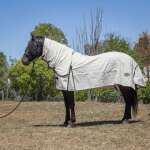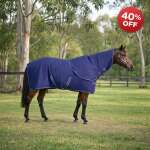


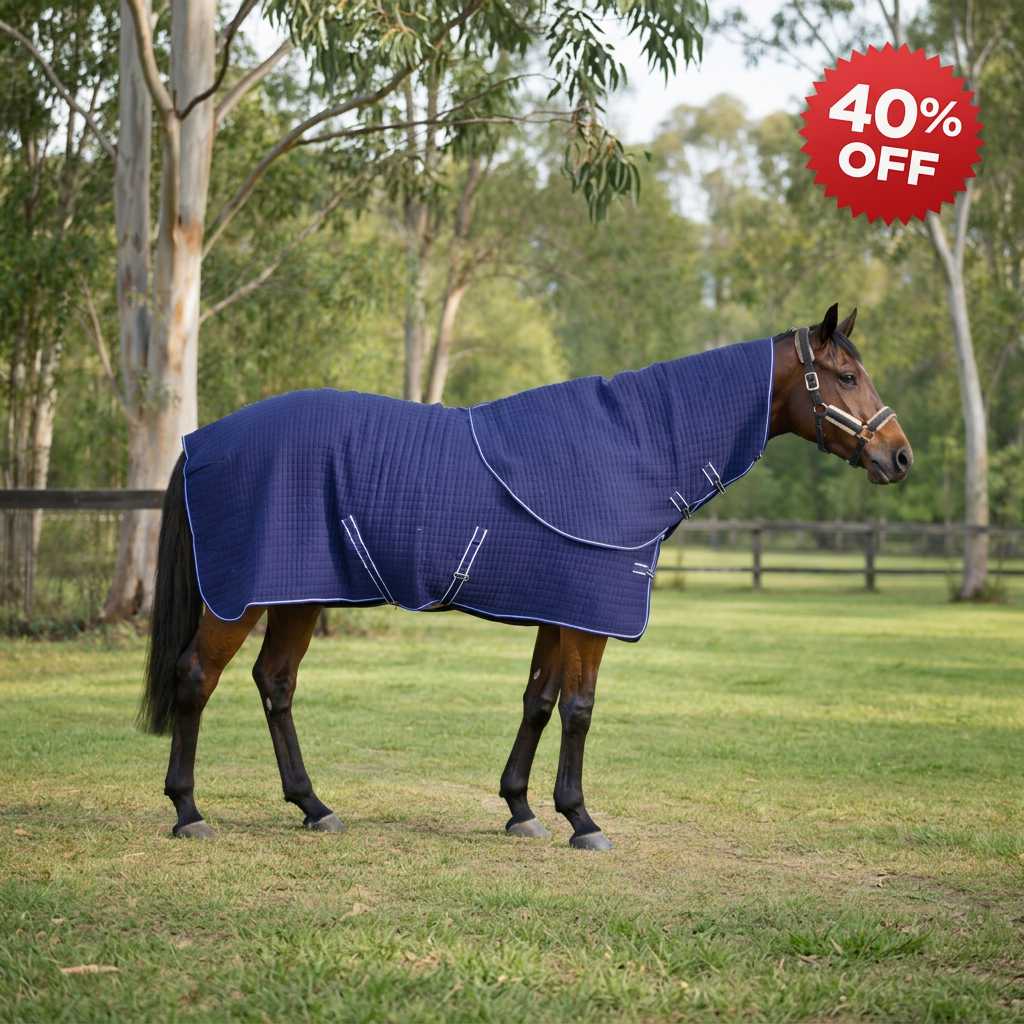
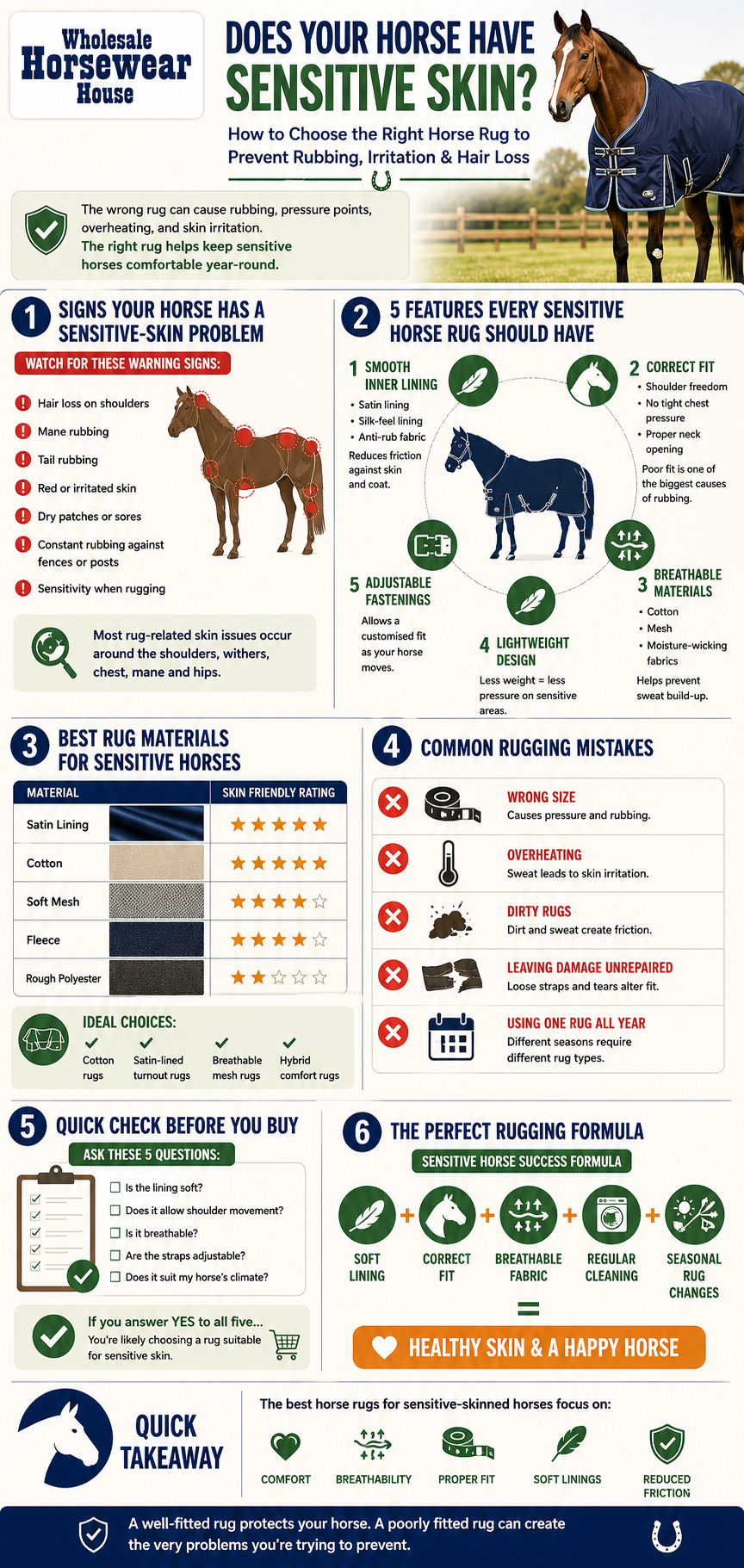
A sensitive-skinned horse needs three things from a rug: a breathable outer (so sweat doesn’t trap moisture against thin skin), satin-lined shoulders (to reduce friction on the shoulders where rubbing commonly occurs), and a fit that doesn’t shift (so the rug doesn’t grind a hot spot into the withers overnight).
Synthetic rugs are also much lighter in weight than traditional canvas rugs, which means they place less pressure on sensitive areas and help reduce rubbing and pressure points while still providing excellent protection.
For horses prone to rug rubs, choosing a rug with satin-lined shoulders can make a significant difference. Pairing your rug with a Skinny Hood Lycra underneath provides an extra smooth layer over the shoulders and chest, helping prevent friction from heavier rugs and keeping your horse’s coat in top condition.
The skin problems a rug should solve
The most common skin problems we see are rain scald, sweet itch, and shoulder rubs.
Rain scald is a bacterial skin infection that develops when moisture remains trapped against the skin for long periods. It typically appears as crusty scabs along the back and rump and is often caused by a rug that is leaking, not breathable enough, or left on too long without being checked.
Sweet itch (Queensland itch) is an allergic reaction to midge bites, usually affecting the mane, withers, and tail. While no rug can cure sweet itch, a well-fitting combo provides a physical barrier that helps reduce insect bites and protects sensitive skin.
Shoulder rubs are caused by friction rather than disease. A rug that is too tight, too loose, or doesn’t have satin-lined shoulders can gradually wear away the coat, leaving bald patches and sore skin. Choosing the correct size, ensuring the rug fits properly, and using a Skinny Hood Lycra underneath can greatly reduce rubbing on horses with sensitive skin.
Whatever rug you choose, the most important step is to remove it regularly and check your horse’s skin. Catching problems early is the best way to prevent small irritations from becoming more serious.
What “breathable” really means
You’ll often see horse rugs described as breathable, but not all rugs perform the same. A truly breathable rug allows excess body heat and moisture to escape, helping keep your horse’s coat dry and comfortable. This is especially important for horses with sensitive skin, as moisture trapped against the coat can lead to irritation and skin problems.
A simple way to check is when you remove the rug. If your horse’s coat feels hot, damp, or clammy underneath, the rug isn’t allowing enough moisture to escape. If the coat is dry and comfortable, the rug is doing its job.
For Queensland conditions, matching the rug to the weather is just as important as choosing the right fit. During warmer months or mild winter days, an unlined cotton or lightweight synthetic combo provides excellent airflow while protecting your horse from the elements. In cooler weather, a lightweight winter combo offers warmth without excessive bulk.
One advantage of synthetic rugs is that they are much lighter than traditional canvas rugs. The lighter weight places less pressure on the shoulders and withers, helping reduce rubbing and pressure points while still providing reliable protection.
The best rule is simple: rug for the weather, not the season. A horse that stays cool and dry under its rug is far less likely to develop skin irritation than one that overheats under a rug that’s too heavy.
Satin-lined shoulders — one of the best ways to prevent rug rubs
If we had to pick one feature that makes the biggest difference for a sensitive-skinned horse, it would be satin-lined shoulders. The shoulder is the part of the horse that moves the most under a rug. Every stride causes the rug to move slightly across the shoulder, and over time that constant friction can wear away the coat, particularly on Thoroughbreds, older horses, and those with fine coats.
A satin lining creates a smooth surface that allows the horse’s coat to glide instead of catching on the rug fabric. By reducing friction across the shoulders, satin-lined shoulders help minimise rubbing, bald patches, and sore spots.
Many of our GTL cotton and synthetic rugs, along with selected winter rugs, feature satin-lined shoulders because we know how effective they are at preventing rubs. When combined with the correct rug size and fit, this simple feature can make a noticeable difference in keeping your horse comfortable.
For horses that are especially prone to rubbing, we also recommend using a Skinny Hood Lycra underneath the rug. The smooth Lycra provides an extra protective layer over the shoulders and chest, further reducing friction and helping keep the coat in excellent condition.
Skin problem → rug solution
Match the cause to the rug feature that actually helps
Layering — Skinny Hood Lycra or Satin/Quilted bib
If your horse still rubs in a satin-lined rug, the next step is adding an under-layer. A Skinny Hood Lycra slips on beneath the rug like a base layer, moving with the horse instead of against it. The rug glides over the smooth Lycra rather than directly on the horse’s coat, greatly reducing friction across the shoulders, withers, and neck.
The Skinny Hood Lycra is our preferred choice for horses with fine or sensitive coats. It covers the head, neck, shoulders, and chest—the areas most prone to rubbing—and provides an extra layer of protection without adding bulk.
Alternatively, a satin bib or quilted bib worn underneath any of our rug range offers another simple and effective way to reduce friction across the shoulders and chest. These bibs create a smooth barrier between your horse’s coat and the rug, helping prevent shoulder rubs while improving comfort.
Whether your horse is wearing one of our lightweight cotton rugs, synthetic rugs, or a heavier winter combo, adding a Skinny Hood Lycra or satin/quilted bib is one of the easiest and most effective ways to help prevent rubbing and keep your horse’s coat in excellent condition throughout the season.
ree-layer system for rub-prone horses
Each layer slides against the next, not against the skin
Layer 1
Skinny Hood Lycra (under-layer)
Stretchy lycra hood covering head, neck and shoulders. Moves with the horse’s skin so the combo above never touches the coat.
Layer 2
Quilted combo (insulation)
The Highlander Quilted Combo or Thermotex Combo — medium-fill insulation, satin-lined shoulder, full neck cover. The everyday rug for cool nights.
Layer 3
Outer shell (frost nights only)
On the coldest nights, an unlined canvas like the Sunny Plus Combo or Stradbroke Jute goes over the top for extra warmth and weather protection.
Choosing the right rug material for sensitive skin
The material of your horse’s rug plays a big part in keeping sensitive skin healthy. A rug should provide the right level of protection without trapping excess heat or creating unnecessary pressure on the coat.
For warmer weather or horses that naturally run hot, a lightweight cotton or synthetic rug offers excellent breathability while protecting against wind, rain, and insects. These rugs are ideal for Queensland conditions, helping your horse stay cool and comfortable.
During colder weather, a lightweight or medium-weight winter combo provides extra warmth while still allowing the horse to move freely. Choosing a rug with satin-lined shoulders helps reduce friction, while ensuring the rug fits correctly prevents unnecessary movement and pressure points.
Older horses or those with finer coats often benefit from lighter synthetic rugs compared with traditional heavy canvas rugs. Because synthetic rugs weigh less, they place less pressure on the shoulders and withers, helping reduce rubbing while still providing warmth and protection.
No matter which rug you choose, the best results come from selecting the right weight for the conditions, checking your horse daily, and making sure the rug remains clean, dry, and correctly fitted.
Sweet itch — protecting your horse from biting insects
Sweet itch (Queensland itch) is an allergic reaction to bites from tiny midges. For horses that suffer from it, preventing insect bites is the most effective way to reduce irritation and constant scratching.
The best approach is to use a fine mesh fly combo that provides maximum coverage while still allowing plenty of airflow. A well-fitting fly rug acts as a physical barrier, protecting the horse’s body, neck, and shoulders from biting insects without causing overheating.
For horses that are especially sensitive, extra protection can make all the difference. Adding a fly mask helps shield the face and eyes, while a GTL Lycra Fly Hood protects the ears, poll, and neck—areas where midges commonly bite. Choosing a rug with a generous drop or belly coverage also helps protect the underside, another favourite target for insects.
Along with the right rug, regular grooming and daily skin checks will help you spot any irritation early. Removing the rug each day to inspect your horse’s skin ensures any small problems are treated before they become more serious, helping your horse stay comfortable throughout fly season.
Three rugs we trust for sensitive skin
Our most-shipped picks for thin-coated, rub-prone and older horses
Older / arthritic
Thermotex Combo
Therapeutic textile reflects body heat back into the muscle layer. Satin-lined shoulder. The rug we reach for when an old horse needs more than insulation.
Rub-prone
Perisher Combo
Satin-lined shoulder gusset, medium fill, full neck cover. The combo we put forward for thin-skinned horses that have rubbed out of every other rug.
Under-layer
Skinny Hood Lycra
The stretchy lycra hood that goes under a heavier combo. Covers head, neck and shoulders. Cheapest fix for any horse that’s still rubbing in a satin-lined rug.
Care — wash often, dry thoroughly, store dry
A sensitive-skin rug worn dirty becomes a sensitive-skin rug that causes skin problems. Sweat, urine and mud build up in the lining over weeks and become an irritant on their own — even on a horse that started with no issues. The rugs we sell to sensitive-skin owners come back to us through our customers’ own washing routines about every four to six weeks during heavy use.
Practical care points we’ve learned from customers over twenty years:
- Wash with a wool-safe or rug-specific detergent — ordinary laundry powder leaves residues that irritate sensitive skin.
- Dry the rug completely before it goes back on. A damp lining trapped against skin overnight is the fastest way to start a rain-scald outbreak.
- Store rugs in a dry, well-ventilated tack room. A rolled-up damp rug sitting in a feed shed grows mould inside the lining.
- Treat the outer shell with a waterproof stain protector once a season — our Waterproof Stain Protector for Horse Rugs renews the water-shedding layer that wears off in heavy rain.
- Rotate two rugs if you can. One on, one drying. It doubles the working life of each rug and gives the lining a chance to fully dry between wears.
Our sibling guide on how long a quality horse rug lasts covers rotation, repair and renewal in more depth. For accessories like the stain protector, the surcingle and leg straps, browse our full horse rug accessories range.
The Wholesale Horsewear House promise
Related reading
What weight horse rug do I need? An Australian climate guide
The companion piece on rug weights. Picking the right fill grade matters even more for sensitive horses — over-rugging traps sweat against the skin and causes the very problems a satin-lined rug is meant to prevent.
Sunshade vs fly mesh combo for the Aussie summer
The strategy guide for sweet-itch and Queensland-itch horses. Fine-mesh coverage from before dawn to after dusk, every day through summer.
How long does a quality horse rug last?
Rotation, repair and renewal — how to get four to six winters out of a satin-lined combo without the lining wearing out.
Horse rug vs combo — when do you need the neck?
For some sensitive horses, neck coverage stops shoulder rub. For others, it causes it. The companion piece walks through when to pick a rug, a combo, or a rug with a separate neck cover.
Sources
- RSPCA Australia Knowledgebase — horse welfare guidance
- Equestrian Australia — peak national equestrian body
- Horse SA — state horse industry body welfare resources
- University of Queensland School of Veterinary Science
- University of Sydney School of Veterinary Science
- Australian Horse Industry Council
Guidance in this article reflects the typical experience of Australian horse owners across the WHWH customer base and is intended as general information. Sensitive-skinned horses vary widely — rain scald, mud fever, sweet itch and shoulder rub can each have multiple underlying causes. If your horse has a persistent skin problem that isn’t resolving with a rug change, speak with your equine vet or call us on (07) 4613 5599 and we’ll talk you through the options.