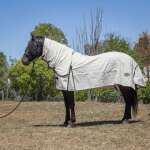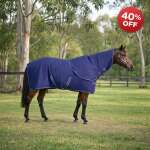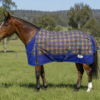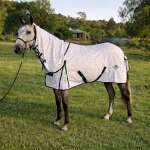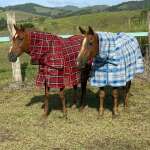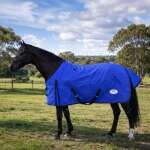


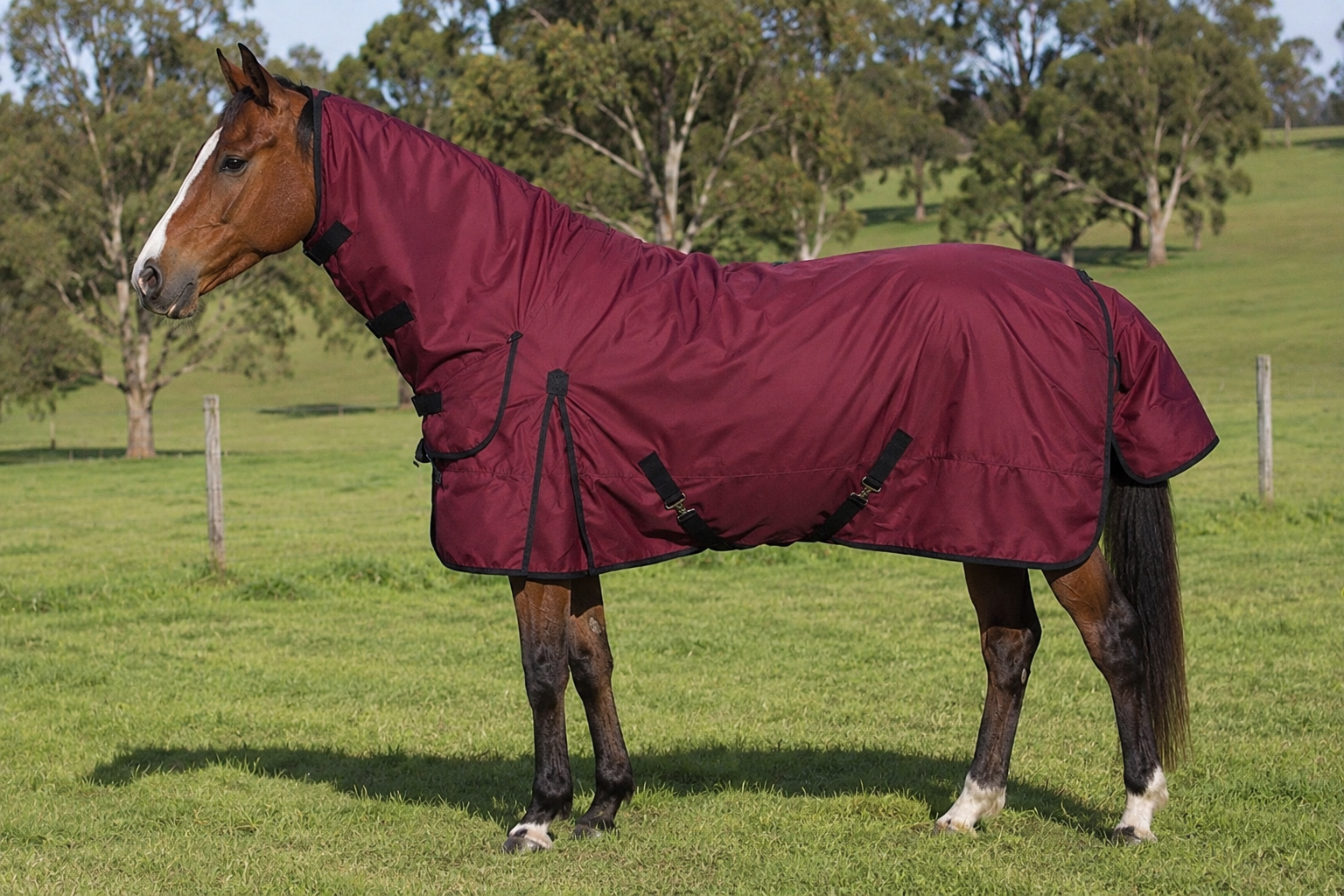
Synthetic horse rugs are typically made from durable polyester fabrics ranging from 600D to 1680D denier. They are lightweight, waterproof or water-resistant, easy to wash, and ideal for wet winter conditions. Canvas horse rugs, on the other hand, are made from heavy-duty natural fibres that are exceptionally breathable, helping regulate your horse’s temperature while reducing moisture build-up. Although heavier than synthetic rugs, quality canvas rugs are renowned for their strength and longevity, often lasting significantly longer with proper care. While synthetic rugs are the practical choice for wet weather and everyday convenience, canvas rugs are ideal for dry, cold conditions where breathability and durability are the priority. Many experienced horse owners keep both in their rug collection—a synthetic rug for wet winter weather and a canvas rug for dry winter nights and the cooler shoulder seasons.
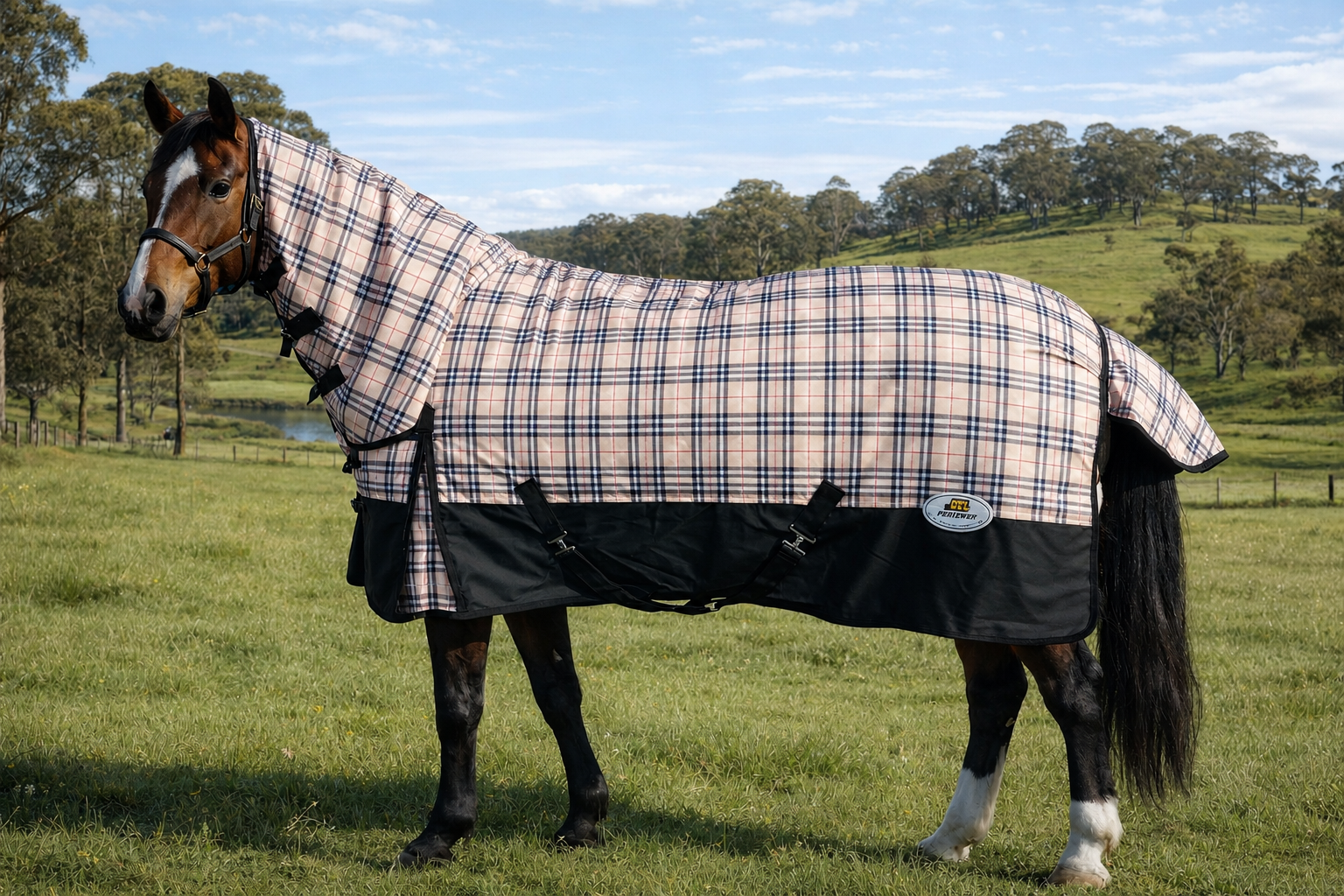
What “synthetic” actually means in horse rugs
When a rug label says “synthetic” it almost always means woven polyester with a polyurethane or wax-style water-resistant coating on the outside. The number you’ll see — 600D, 1200D, 1680D — is the denier rating, a measure of how thick each individual thread is. Higher denier means thicker threads, which means the fabric resists tearing, puncture and paddock-mate teeth better. 600D is fine for stable use; 1200D is the everyday Australian paddock standard; 1680D is what we put on horses that are hard on rugs.
“Ripstop” is a weave pattern, not a material. Every few threads, a heavier reinforcement thread is woven in to form a fine grid. If the fabric snags or tears, the rip stops at the next reinforcement line instead of running the length of the rug. Every quality synthetic combo we stock — the Simpson Ripstop Unlined Combo, the Simpson Lined Combo, the Highlander Quilted Combo — uses a ripstop weave for exactly this reason.
Inside the shell, a synthetic combo usually carries a polyester fill (the “100g, 200g, 300g” insulation rating you’ll see on labels — covered in detail in our rug weight guide) and a soft polyester or nylon lining. The whole thing is sewn together with bound seams and reinforced at the high-wear points: shoulders, withers, surcingle attachments, tail flap.
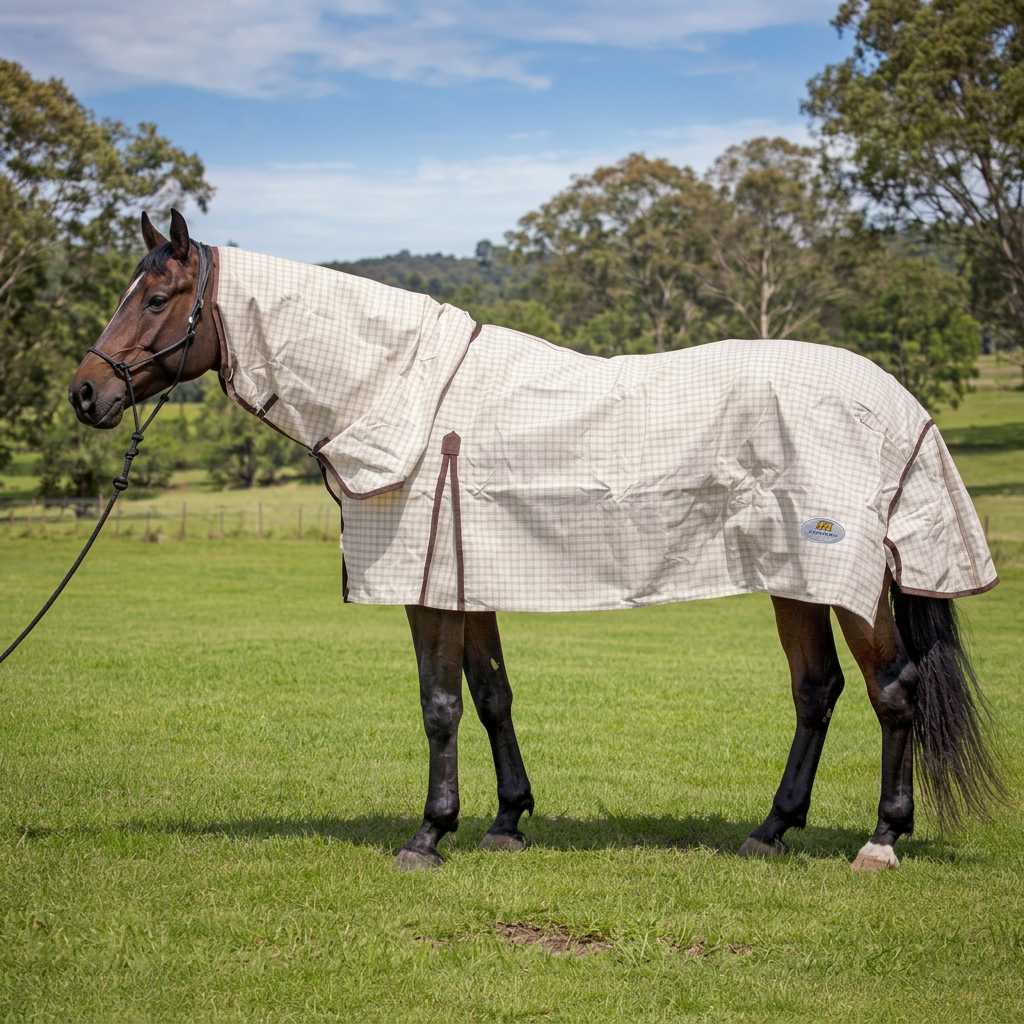
What Makes Canvas Horse Rugs Different?
Canvas horse rugs are made from heavy-duty natural fibres that have been trusted by Australian horse owners for generations. Unlike synthetic fabrics that rely on a waterproof membrane, canvas provides a tough, breathable outer that helps regulate your horse’s temperature while reducing moisture build-up.
Our canvas rugs feature a Texguard-coated outer layer, which helps repel light rain and dew while maintaining the natural breathability of the canvas. This coating allows water to bead and run off the surface, helping keep your horse comfortable in changing weather conditions.
One of the biggest advantages of canvas is its durability. With proper care, a quality canvas rug can provide many years of reliable use, making it a favourite for horses living outdoors during dry, cold weather. The breathable construction helps reduce condensation under the rug, creating a more comfortable environment for your horse.
While synthetic rugs are the ideal choice for prolonged wet weather, canvas rugs remain the preferred option for many horse owners seeking exceptional strength, breathability, and long-lasting performance in cooler, drier conditions.
Synthetic ripstop vs canvas — property by property
How the two materials actually behave on an Australian paddock horse
Side-by-Side: Canvas vs Synthetic in Australian Weather
In sustained heavy rain, synthetic denier rugs have the advantage. Their waterproof outer is designed to repel prolonged rainfall, making them the ideal choice for wet winter conditions and high-rainfall regions. Lightweight and quick-drying, synthetic rugs provide excellent protection when rain is expected for extended periods.
In dry, cold weather, canvas ripstop rugs with a Texguard coating excel. The heavy-duty canvas outer is naturally breathable, helping regulate your horse’s temperature while reducing condensation under the rug. The Texguard coating provides added resistance to rain and morning dew, while the canvas construction offers exceptional durability and comfort during crisp winter nights.
For changing Australian conditions, both have their place. Synthetic denier rugs are the practical option for prolonged wet weather, while canvas ripstop rugs are ideal for cool climates where breathability, strength and longevity are the priority. Many experienced horse owners keep both on hand—using a synthetic rug during rainy periods and a canvas rug for dry winter weather and cooler shoulder seasons.
Side-by-Side: Breathability
Canvas ripstop rugs with a Texguard coating offer superior breathability. The natural canvas fibres allow air to circulate more freely, helping excess body heat and moisture escape before it builds up under the rug. This creates a more comfortable environment for your horse and helps reduce sweating during cool but variable conditions.
Synthetic denier rugs are less breathable by design. Their tightly woven, waterproof outer is excellent at keeping rain out, but it also reduces airflow compared with canvas. In mild weather or if a rug is too warm for the conditions, heat and moisture can become trapped, leaving your horse damp underneath.
Choosing the right rug for the conditions is key. Canvas rugs are ideal when breathability and temperature regulation are the priority, while synthetic rugs provide superior protection in prolonged wet weather. Matching the rug’s weight and material to the weather will help keep your horse comfortable, dry and at the right temperature.
Side-by-Side: Weight and Feel
Synthetic denier rugs are noticeably lighter than canvas rugs. Their lightweight construction makes them easier to lift, fit, fold and store, making them a popular choice for everyday use and frequent rug changes.
Canvas ripstop rugs are heavier and more substantial. While they require a little more effort to handle, the added weight helps the rug sit securely on the horse and reduces movement in windy conditions. This stability can minimise shifting and rubbing, particularly for horses living out in exposed paddocks.
Both materials have their advantages. Synthetic rugs offer convenience and ease of handling, while canvas rugs provide a secure, stable fit and exceptional durability. Choosing between them comes down to your climate, management style and your horse’s individual needs.
Care — what each material actually needs
A canvas lasts twice as long as a synthetic, but only if you treat it like a canvas
Synthetic care
Wash, dry, re-proof
- Cool machine wash with a rug-safe detergent, never a regular laundry powder
- Air dry flat, never in a dryer — heat melts the waterproof coating
- Re-proof the shell every 2 to 3 seasons with a spray-on rug waterproofer
Canvas care
Brush, hose, sun dry
- Hard brush off mud and grass when dry — do not machine wash a canvas
- Hose down if needed and dry in still air, ideally in the sun
- Patch small holes with waxed thread; the rug carries on for years
Off-season storage
Dry, dark, mouse-proof
- Both materials must be bone dry before storage or you will get mildew
- Store in a sealed plastic tub or a hung rug bag, never on a concrete floor
- Check leg straps and surcingles in spring before the next season starts
Why We Still Make Canvas Rugs?
Canvas horse rugs have stood the test of time because they continue to perform in Australian conditions. While rug materials have evolved over the years, quality canvas remains a favourite among horse owners who value durability, breathability and long-term performance.
Our canvas rugs are built from heavy-duty ripstop canvas with a Texguard-coated outer, providing excellent resistance to rain and dew while maintaining the natural breathability that canvas is known for. They are designed to keep horses comfortable during cool weather, allow excess heat and moisture to escape, and withstand the demands of everyday paddock life.
Canvas rugs are particularly well suited to horses living outdoors, where strength, stability and longevity are important. Their heavier construction helps them stay in place in windy conditions, while the tough canvas fabric stands up to years of regular use with proper care.
For horses exposed to prolonged wet weather, a synthetic denier rug remains the better option due to its fully waterproof outer. This is why many experienced horse owners keep both styles available—a canvas rug for cool, dry conditions and a synthetic rug for extended periods of rain—ensuring their horse is comfortable in every season.
The WHWH range, split by material
Across our full horse rug range, the synthetic and canvas philosophies sit side by side. Here’s how the Wholesale Horsewear House and GTL lineup breaks down by material, so you can pick on the philosophy that fits your horse and your climate.
Synthetic, canvas, or a lighter option
Three philosophies side by side across the WHWH and GTL range
Synthetic lineup
Polyester ripstop shell
Light, water resistant, machine washable, faster drying.
- Midi 100
- Perisher Combo
- Breatha Rainsheet
Canvas lineup
Natural fibre, heritage Aussie
Breathes through warm afternoons, lasts twice as long, repairable.
- Simpson Unlined
- Simpson Lined
- Highlander Quilted
- Highlander Unlined
- Husky Lined
Poly cotton/Mesh
Perfect for under rug or paddock sheet
Synthetic shell engineered to breathe, for horses that get hot under traditional fills.
- PVC Shadecloth Mesh
- Lecanto Mesh
- Sunshade Mesh
- Sunny Plus or Sunny
- Deluxe Ripstop
- Woodland or Thrifty
- Elite Ripstop
The Wholesale Horsewear House promise — one of each
The best rug for your horse depends on your climate, your horse’s lifestyle and the conditions they’re living in. That’s why we believe there’s a place for both synthetic denier and canvas rugs in every horse owner’s collection.
A quality synthetic rug offers outstanding waterproof protection for prolonged wet weather, while a canvas ripstop rug with a Texguard-coated outer provides exceptional breathability, durability and comfort during cool conditions. Each material has its strengths, and choosing the right one means your horse stays comfortable all year round.
Wholesale Horsewear House is a family-run business based in Toowoomba, Queensland, proudly designing the GTL rug range since 2005. Every rug is selected with Australian conditions in mind and backed by years of experience helping horse owners find the right fit for their horses.
If you’re unsure which rug is best for your horse, our team is always happy to help you choose the right option for your climate, management style and budget.
Related reading
What weight horse rug do I need? An Australian climate guide
Light, medium, heavy or arctic — how rug fill grams map to Australian climate zones, with the right GTL rug for each one.
How long does a quality horse rug last?
Realistic paddock-life expectations across synthetic and canvas rugs, with care steps that buy you extra seasons.
Buying horse rugs wholesale vs retail — what changes?
Where wholesale pricing actually shows up in a rug, and where it doesn’t — the WHWH view of value vs price.
Horse rug vs combo — when do you need the neck cover?
The plain answer on rugs vs combos, what each one does on a paddock horse, and when the neck cover earns its keep.
Sources
- RSPCA Australia Knowledgebase — horse welfare and rugging guidance
- Equestrian Australia — peak national equestrian body
- Horse SA — state horse industry body and owner resources
- Australian Horse Industry Council — national industry guidance
- University of Sydney School of Veterinary Science
- University of Queensland School of Veterinary Science
Guidance in this article reflects the typical experience of Australian horse owners across the WHWH customer base and is intended as general information for unclipped horses in normal body condition. Material lifespan figures are averages and vary with horse temperament, paddock conditions, and how the rug is washed and stored. Individual horses vary — clipped horses, older horses, horses recovering from illness, sensitive-skinned horses, and horses housed differently may need a different approach. If in doubt about your specific horse, speak with your equine vet or call us on (07) 4613 5599 and we’ll talk you through it.