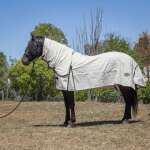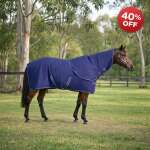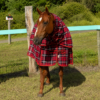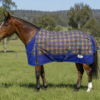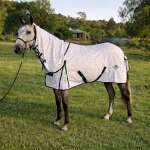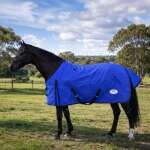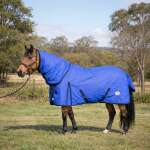


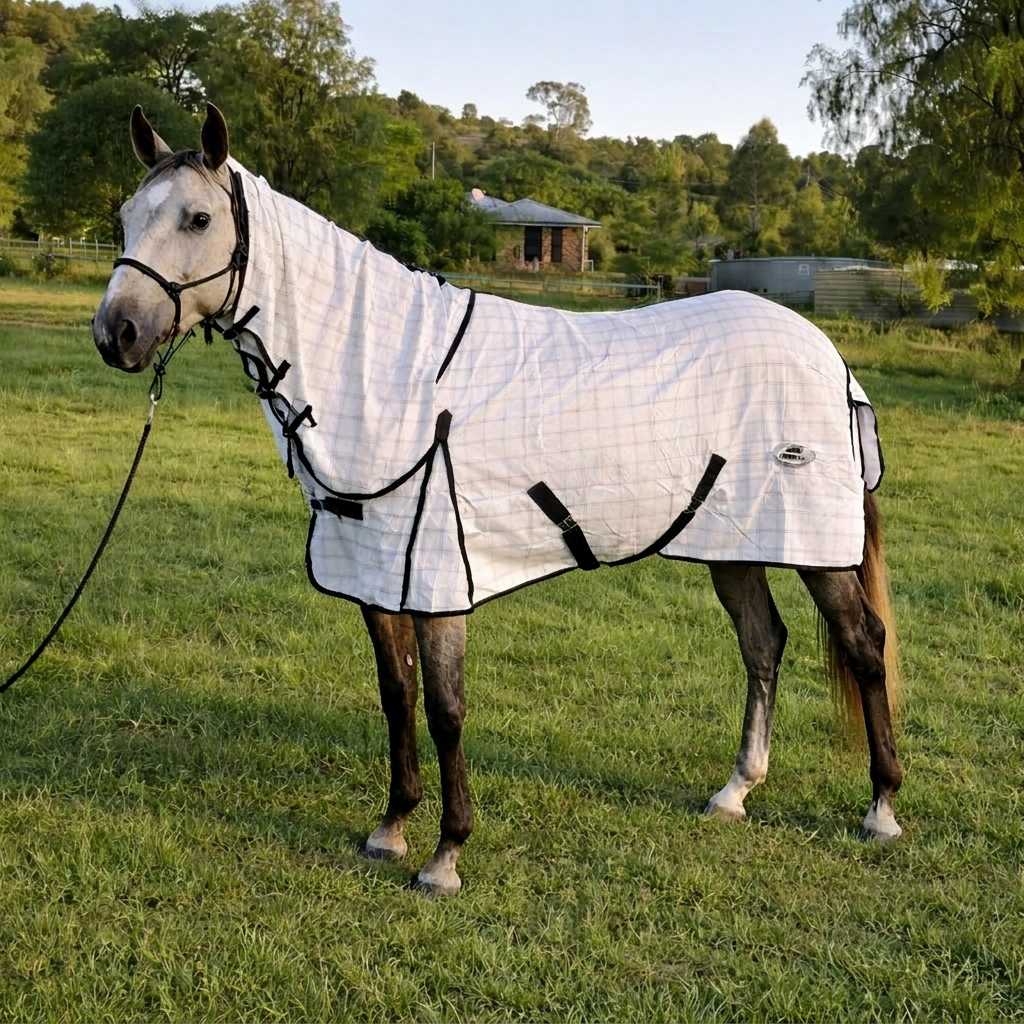
Crossed surcingles are designed to keep the rug secure by helping prevent it from shifting, twisting, or lifting in windy conditions. They provide a more stable fit than straight surcingles and are especially useful for active horses, horses that roll frequently, or those living in exposed paddocks. Most Australian paddock horses do well with standard crossed surcingles, which provide excellent rug security without the added bulk of a full belly band.
What a belly band actually does
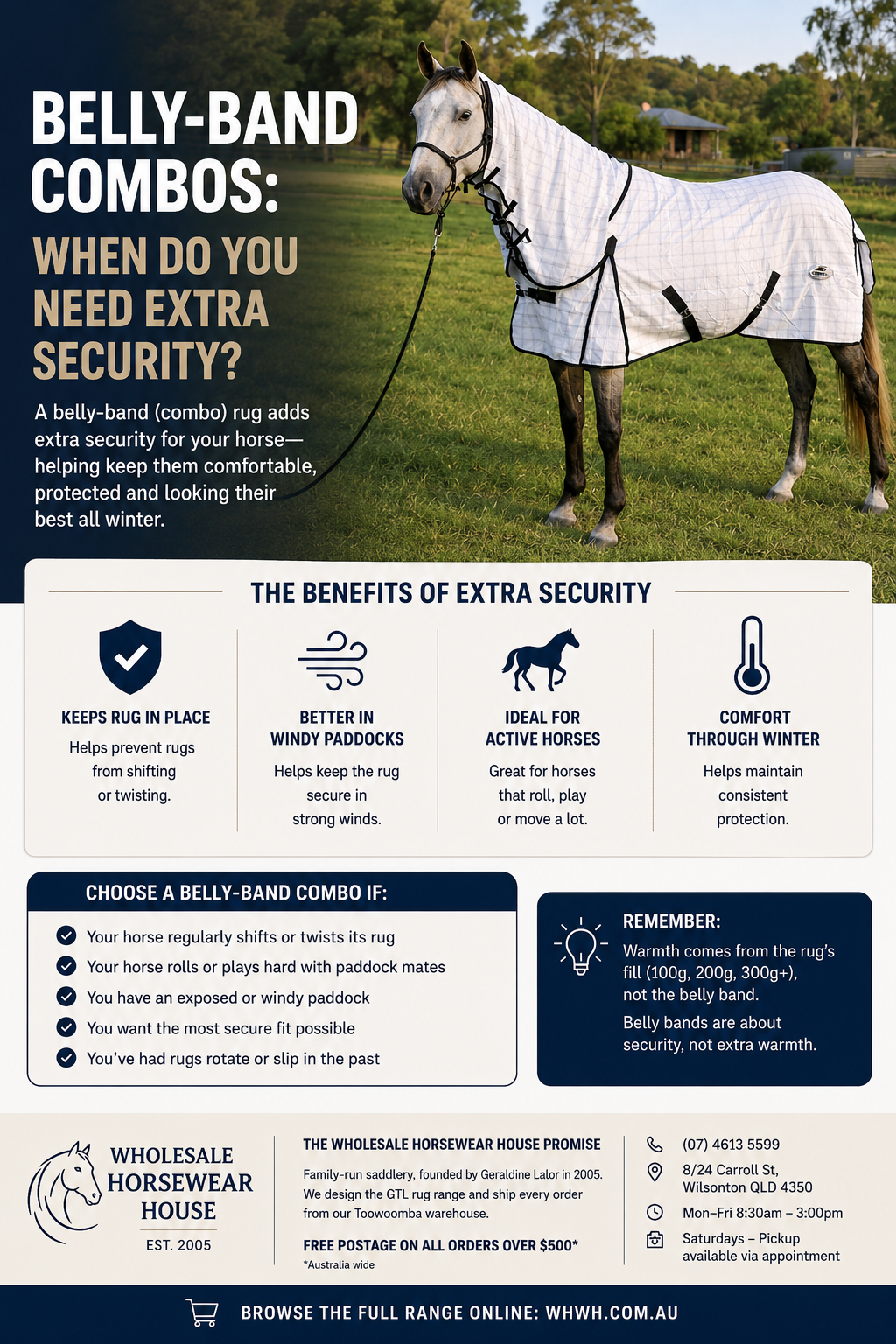
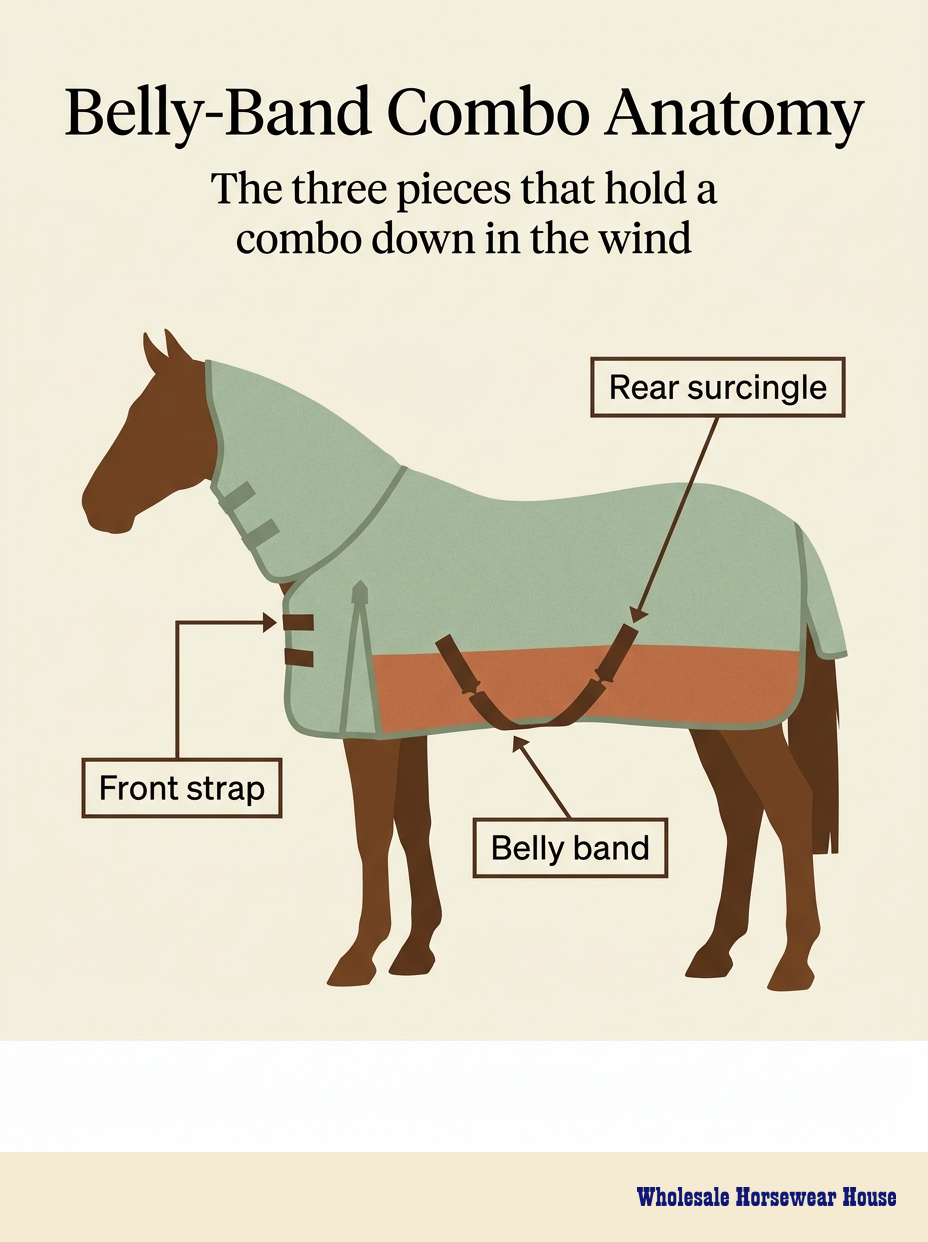
Walk past most paddock horses in winter and you’ll see a standard combo with two crossed surcingles underneath the belly. A belly-band combo takes that one step further by adding extra coverage around the surcingles to create a more secure fastening underneath the horse. It isn’t designed to make the horse dramatically warmer or waterproof the belly—its primary purpose is to keep the rug stable.
The main benefits are:
- Keeps the rug more secure. The extra coverage around the surcingles helps reduce the rug shifting sideways, twisting, or lifting when horses roll, play, or gallop around the paddock.
- Improves stability in windy conditions. By providing a more secure fastening underneath the horse, belly bands help the rug stay in place when strong winds catch it.
For most horses, standard crossed surcingles are perfectly adequate. But if your horse is particularly active, lives in an exposed paddock, or has a habit of shifting rugs overnight, a belly-band rug is a worthwhile upgrade because of the extra security it provides.
When you definitely want a belly band
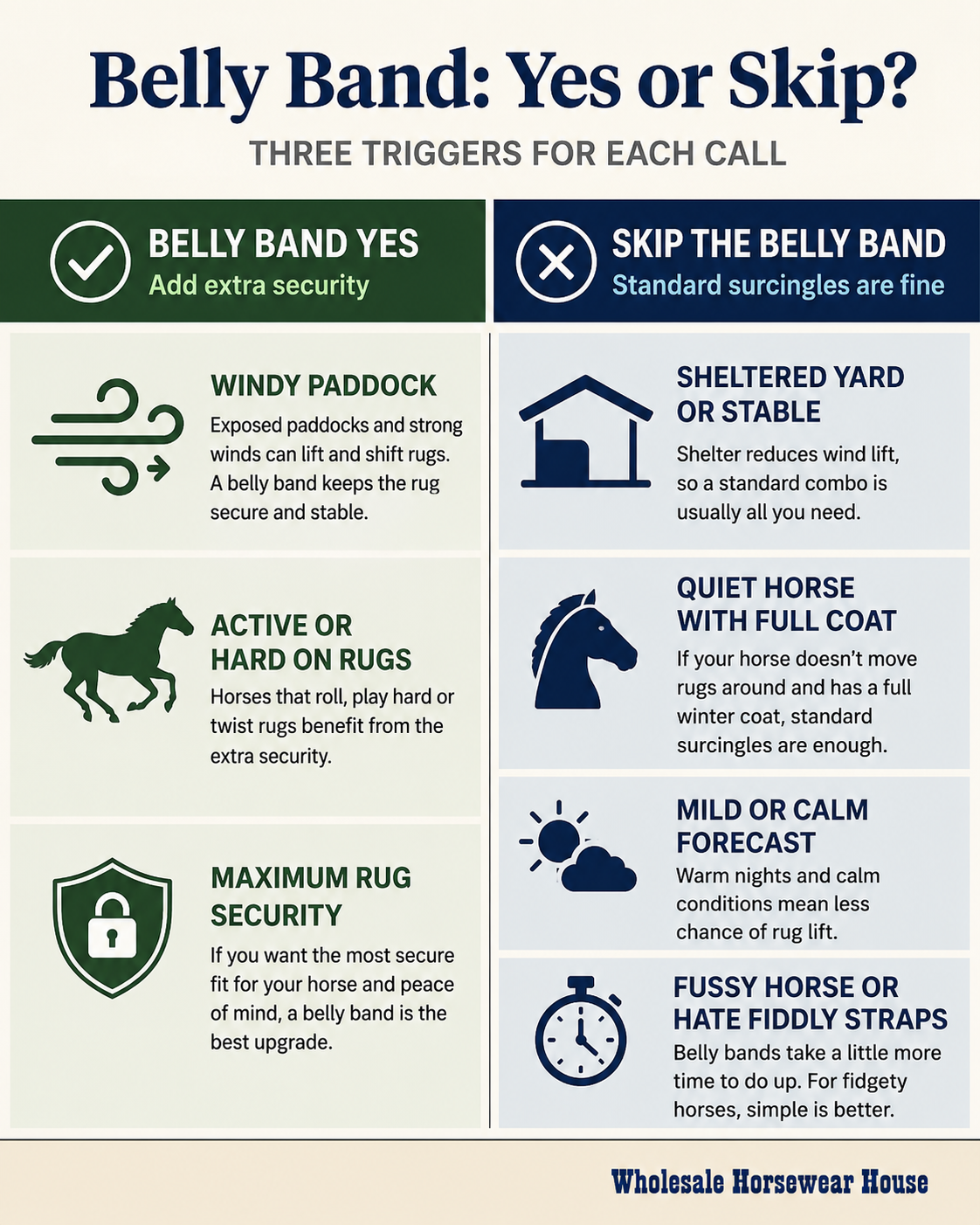
There are three situations where a belly-band rug is well worth the upgrade.
1. Your horse is hard on rugs.
If your horse rolls frequently, plays with paddock mates, gallops around, or somehow manages to twist every rug you put on, a belly band provides extra stability underneath the horse. It helps keep the rug sitting where it should, reducing movement and the chance of it shifting out of place.
2. Your paddock is exposed to strong winds.
If your property regularly experiences windy conditions, a belly-band rug offers a more secure fit than standard surcingles alone. While no rug is completely windproof, the extra support underneath helps reduce lifting and movement, making it less likely the rug will twist or blow out of position overnight.
3. You simply want maximum rug security.
Some horses rarely move their rugs, while others seem determined to test every strap and buckle. If you want the most secure fit available—particularly for valuable rugs or horses that spend long periods in the paddock—a belly-band rug is a worthwhile upgrade for the added stability and peace of mind.
For quiet horses in sheltered paddocks, standard crossed surcingles are usually more than adequate. But if rug security is your priority, a belly-band design is one of the best upgrades you can make.
When you don’t need a belly band
Most Australian paddock horses, most of the time, don’t need a belly band. Standard crossed surcingles provide plenty of security for many horses.
Sheltered paddocks or stables.
If your horse is kept in a stable or a well-sheltered paddock with little exposure to strong winds, a standard combo will usually stay in place without any issues.
Quiet horses that rarely move their rugs.
Some horses simply don’t shift their rugs. If your horse doesn’t roll excessively, play rough with paddock mates, or come in wearing its rug sideways, there’s often little benefit in upgrading to a belly band.
Calm weather conditions.
During periods of settled weather with little wind, standard crossed surcingles are generally more than adequate for keeping a well-fitting rug secure.
If you prefer a simpler rug.
A standard combo is quicker to put on and take off. If your horse is settled in its rug and you’ve never had issues with shifting or twisting, there’s no need to add features you won’t use.
The bottom line? Choose a belly-band rug for extra rug security, not because every horse needs one. For many horses, a well-fitted rug with standard crossed surcingles is all that’s required.
The fit problem belly bands solve — and the one they can cause
The main reason horse owners choose a belly band is simple: extra rug security. By providing a more secure fastening underneath the horse, belly bands help reduce the rug shifting sideways, twisting, or lifting in strong winds. They’re particularly useful for horses that roll frequently, play with paddock mates, or live in exposed paddocks where rugs are more likely to move.
Like any rug, however, a belly-band combo must fit correctly. If the rug is too small, or the belly bands are done up too tightly, they can create pressure under the horse’s belly and cause rubbing. On the other hand, if they’re left too loose, the rug loses the extra stability the belly band is designed to provide.
The fix is straightforward: choose the correct rug size and adjust the belly bands so they’re secure without being tight. You should be able to fit your hand comfortably between the belly bands and your horse’s underside. The bands should support the rug without pulling it firmly against the horse.
At Wholesale Horsewear House, our Thrifty and Perisher belly-band combos are available in sizes 5’3 through to 6’9, so there’s an option to suit most horses. If you’re unsure which size to choose, see our guide on How to Measure Your Horse for a Rug before ordering.
The decision — three questions, one answer
If you’re still on the fence, three questions get most owners to the right call:
Three questions, one answer
Walk through them in order — one yes is enough
Question 1
Is the paddock exposed?
Open paddock with no shelter, on a ridge, or facing the prevailing wind. Sustained gusts over 30 km/h overnight on most winter nights.
Yes → belly band.
Question 2
Is your horse hard on rugs?
Does your horse roll frequently, play with paddock mates, gallop around the paddock, or regularly shift its rug?
Yes → Choose a belly band. The extra security helps keep the rug in place during normal paddock activity
Question 3
Does your horse regularly shift or twist its rugs?
Yes → Choose a belly band. The extra security helps keep the rug in place and reduces shifting and twisting.
No → Standard crossed surcingles are usually all you need.
Thrifty Combo With Belly Bands — the everyday pick
Our most popular belly-band rug is the Thrifty Combo with Belly Bands. It’s built on the same proven design as our original Thrifty Combo that horse owners across the Darling Downs and inland NSW have trusted for years. The difference is the addition of belly bands underneath the horse, giving the rug a more secure fit while maintaining the same fabric, lining and overall design.
It earns its keep on:
- Horses that regularly shift, twist or pull their rugs out of position.
- Active horses that roll, play with paddock mates or spend plenty of time moving around the paddock.
- Horses living in exposed paddocks where strong winds can cause rugs to lift and move.
If you’re happy with the fit and durability of a standard Thrifty Combo but want extra rug security, the Thrifty Combo with Belly Bands is the natural upgrade.
Perisher Turnout Combo — the heavyweight option
When winter really sets in, the Perisher Turnout Combo with Belly Bands is our premium heavyweight option. It combines a warm, heavy-fill turnout rug with the added security of belly bands, making it ideal for horses that need both insulation and a more secure fit.
It’s the rug to choose if:
- You live in a cold climate where heavyweight winter rugs are needed.
- Your horse is clipped and requires a heavyweight turnout rug.
- Your horse regularly shifts or twists its rugs.
- Your paddocks are exposed to strong winds.
- You want the warmth of a heavyweight rug with the added security of belly bands.
If your horse doesn’t need the extra security of belly bands, the Simpson Lined Combo is an excellent heavyweight alternative. Its traditional design makes it a popular choice for horses that are settled in their rugs and simply need reliable warmth through winter.
At-a-glance — the two belly-band combos in our range
Two belly-band combos, two jobs
Same idea, different weight bands — pick by your overnight low
Everyday winter
Thrifty Combo With Belly Bands
Medium-fill combo, same shell and lining as the original Thrifty, with the belly band added under the barrel.
- Open paddocks on the Downs, the Hunter, the western slopes
- Unclipped horses copping the wind from paddock layout
- Owners with a rug-rotation history
Frost belt & alpine
Perisher Turnout Combo
Heavyweight turnout combo, heavier shell, heavier fill, full neck cover, belly band included.
- Stanthorpe, Glen Innes, Snowy Mountains, Tas highlands
- Clipped horses in show or competition work
- One-rug owners who want the heaviest in the range
The Wholesale Horsewear House promise
We’re a family-run saddlery founded by Geraldine Lalor in 2005. We design the GTL rug range and ship every order from our warehouse at 8/24 Carroll Street, Wilsonton, QLD 4350 — including every belly-band combo featured in this article.
If you’re unsure whether a belly-band rug is the right choice for your horse, give us a call on (07) 4613 5599. We’ll help you choose the right rug based on your horse, paddock conditions and how your horse wears its rugs—the same honest advice we’d give you in store.
Free shipping on all orders over $500 Australia-wide.
Visit us Monday to Friday, 8:30 am – 3:00 pm, or arrange a Saturday pickup by appointment. You can also browse our full range of horse rugs online anytime.
Related reading from the Wholesale Horsewear House blog
What weight horse rug do I need? An Australian climate guide
The companion guide. Light, medium, heavy or arctic — the right fill for your part of the country, with the GTL rug that fits each.
How to measure your horse for a rug
The fit guide — especially important on a belly-band combo where the under-barrel wrap has its own sizing tolerance.
Horse rug vs combo — when do you actually need the neck?
If the belly-band decision is one shaped by wind and clipping, the neck-cover decision is shaped by the same conditions — this piece walks the trade-off.
Best horse rugs for sensitive-skinned horses
Belly bands and rain scald belong in the same conversation as sensitive-skin rugs — this piece covers what to put on a horse that reacts to most rug linings.
Sources
- Bureau of Meteorology — Australian climate classification map — the official zone map this article’s wind-exposure context is drawn from.
- RSPCA Australia Knowledgebase — peak welfare body guidance on rugging, clipping, and shelter.
- Equestrian Australia — peak national equestrian body, horse welfare resources.
- Horse SA — Australian horse-owner welfare and care information.
- Australian Horse Industry Council — peak industry body across the Australian horse sector.
- University of Sydney School of Veterinary Science — equine thermoregulation and skin-health research base.
Guidance in this article reflects the typical experience of Australian horse owners across the WHWH customer base and is intended as general information for unclipped horses in normal body condition. Individual horses vary — clipped horses, older horses, horses with a history of rain scald or mud fever, and horses housed differently may need a different approach. If your horse has recurring skin issues along the belly or girth line, speak with your equine vet before changing rugs, or call us on (07) 4613 5599 and we’ll talk you through it.