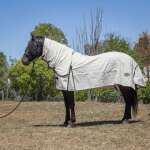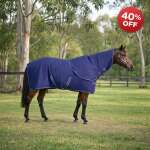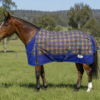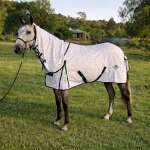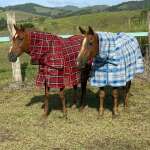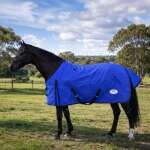


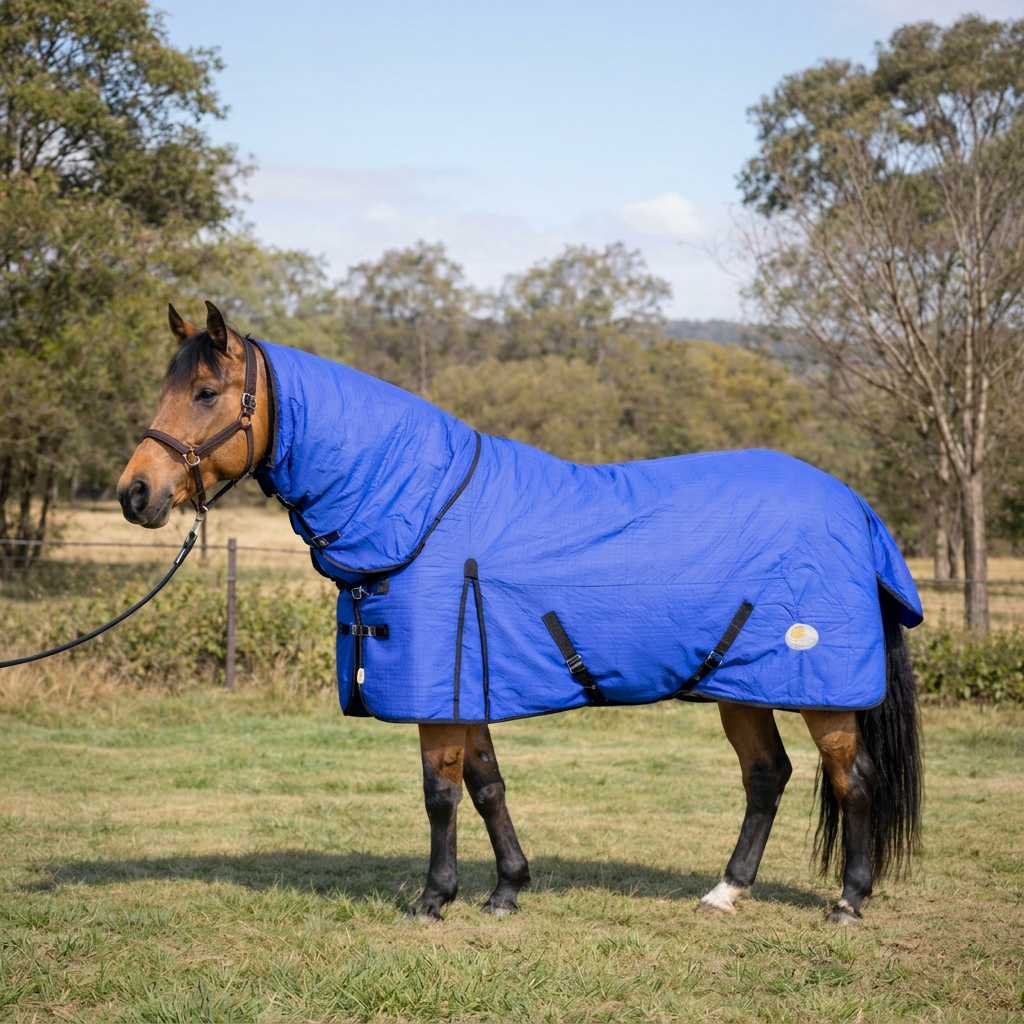
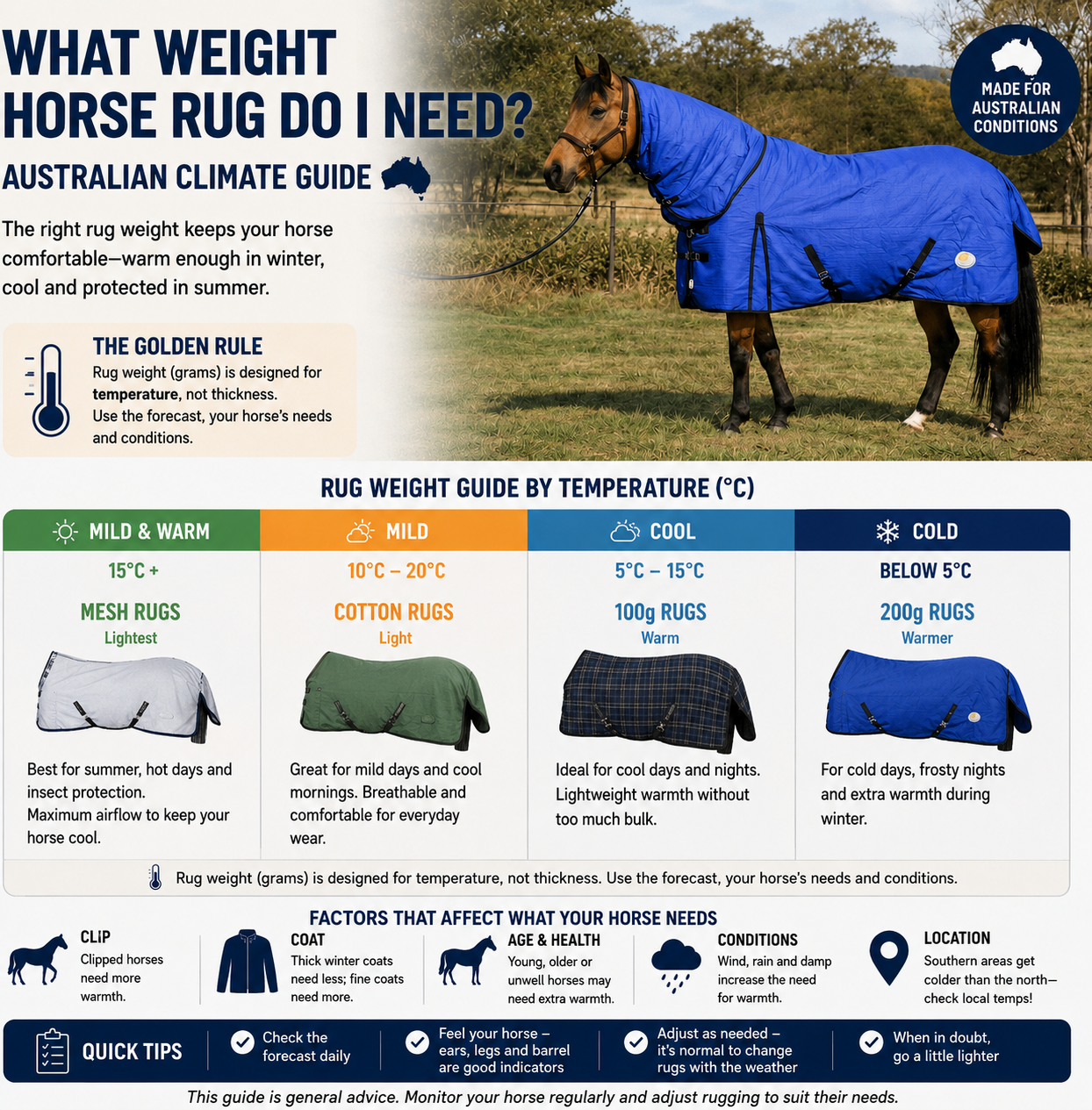
For most Australian horses during the cooler months, a 200g medium-weight rug is the ideal choice. It provides enough warmth for chilly nights across much of Queensland, New South Wales and Victoria, while remaining comfortable as temperatures rise during the day. Lighter rugs with 0–100g fill are generally best suited to mild weather or the change of seasons.
Below, we’ll explain the different rug weights, where they’re best suited around Australia, and why a 200g rug is the most versatile choice for the majority of Australian horses.
How “rug weight” is actually measured
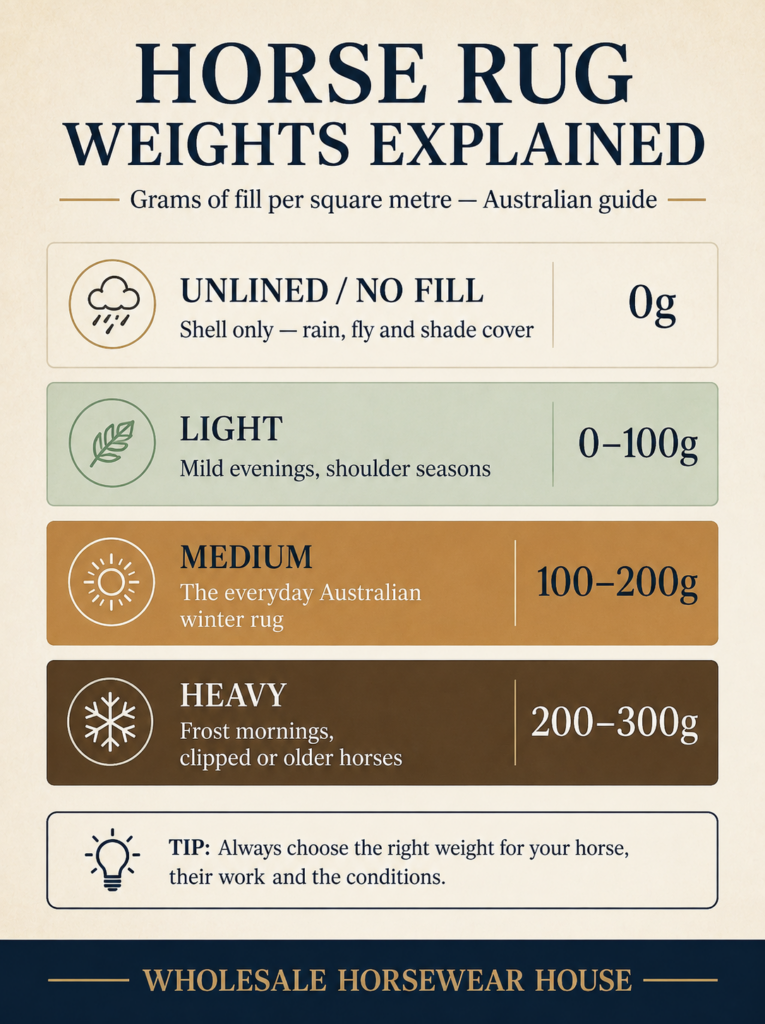
Rug weight is fill grams per square metre — the amount of polyfill (or wool, in heritage rugs) sewn between the outer shell and the lining. It’s a measure of insulation, not the overall weight of the rug in your hands. A 100g fill rug feels light and breathable; a 300g fill rug is dense and traps a lot of body heat.
Manufacturers across the world use roughly the same bands:
- No fill / unlined — shell-only rugs. Cotton, canvas, ripstop or PVC mesh. Used for shade, fly protection, or as a stable cover over the top of a quilted layer.
- Light: 0–100g — a thin layer of insulation. Cool evenings, late-summer mornings, or for sensitive-skinned horses who run warm.
- Medium: 100–200g — the Australian workhorse rug. Suits most paddock horses through autumn and most of winter across QLD, NSW, SA and northern Vic.
- Heavy: 200–300g — frost mornings inland, alpine fringe, clipped horses, older horses, or horses that drop weight in winter.
- Arctic: 300g+ — Snowy Mountains, Stanthorpe-type frost belts, Tasmanian highlands, or for show horses kept clipped year-round.
Australian climate zones — what they mean for rug choice
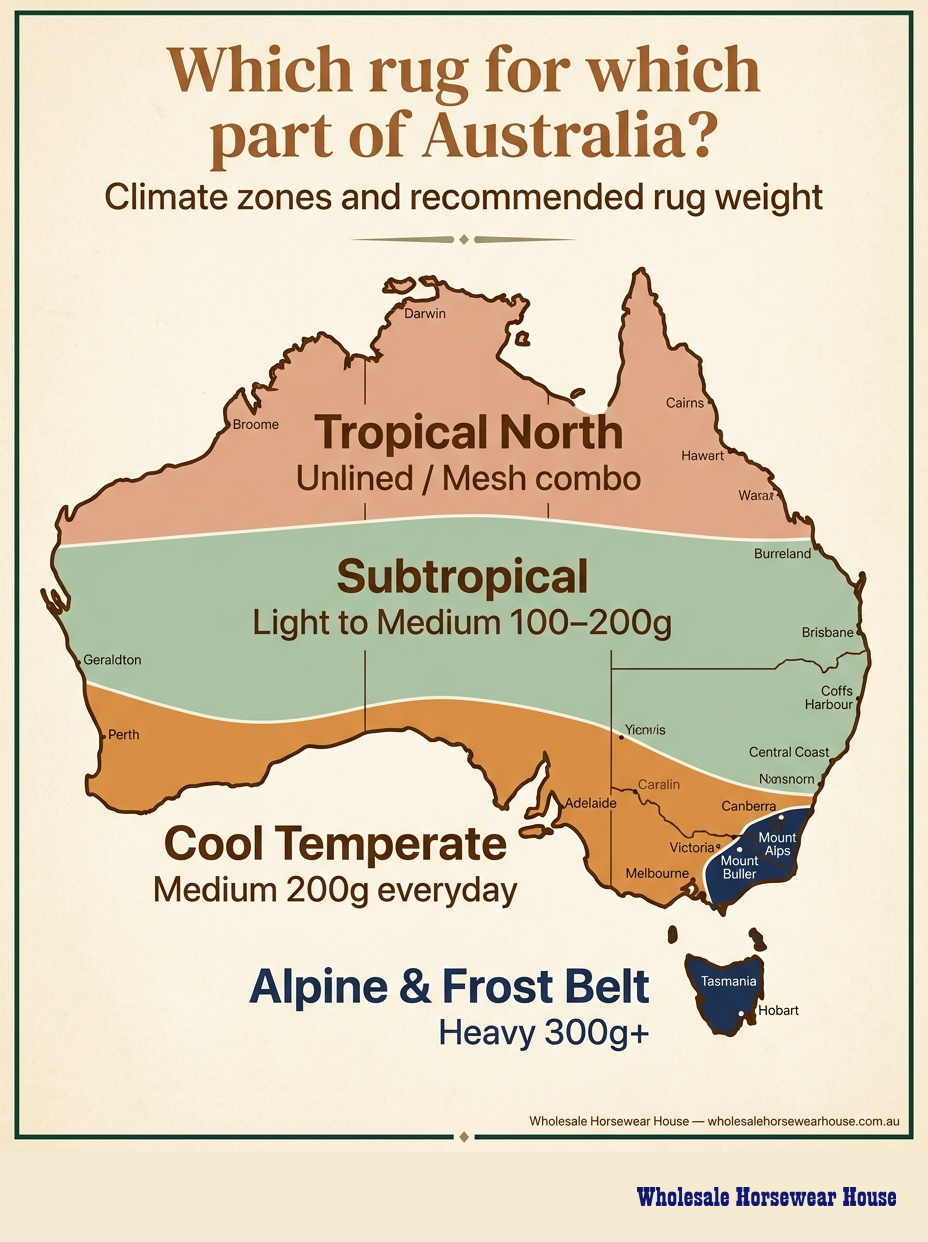
Australia covers six Bureau of Meteorology climate zones (BoM publishes the map here), and the rug your horse needs in tropical FNQ is nothing like the rug your horse needs in Cooma or Stanthorpe. The four practical buckets we ship into:
Tropical north (Cairns, Townsville, Darwin): Year-round heat. The job a rug does here is shade, fly protection and rain coverage — not warmth. PVC shadecloth combos and mesh combos dominate. A real Wholesale Horsewear House customer in North Queensland summed it up on our Instagram earlier this year:
She’s not wrong. The unlined Aussie canvas pattern has earned its keep in the tropics for decades because it breathes faster than it warms — exactly what a North Queensland horse needs through the wet season.
Subtropical and warm temperate (SE QLD, coastal NSW, Perth, Adelaide): Mild winters, occasional cold snaps. A light to medium fill (100–200g) combo handles 95% of nights. You rarely need a heavy rug — but you do need one rug that can be layered up on the coldest mornings.
Cool temperate (Vic, Tas lowlands, inland NSW, Canberra): Real winter. Medium 200g is the everyday rug; heavy 300g comes out for frost mornings and for clipped horses.
Light (0–100g) — the summer and shoulder-season rugs
A light rug isn’t there to keep a horse warm — it’s there to keep rain off in a brief cold front, keep flies off in summer, or stop a clipped horse losing heat on a still cool morning.
The WHWH range that fits this category:
- Sunny Plus Rug and Sunny Plus Combo — light unlined fabric, designed for warm conditions, rain-resistant but breathable.
- Stradbroke Rug (Jute) & Stradbroke Combo (Jute) — The heritage Aussie jute weave. Unlined and highly breathable, these traditional jute rugs are ideal for stable and paddock use in dry conditions while helping to remove excess hair and keep your horse clean.
- Highlander Unlined Combo — a true zero-fill shell. Wind and rain protection without insulation.
- Lecanto Fly Mesh Combo and Ripshield Mesh Combo — open-weave mesh for fly season; almost zero thermal effect.
If you’re in the tropics or you’re rugging an unclipped horse through a Toowoomba spring, this is your section. Browse the full summer horse rugs range to see what we currently have in stock in your horse’s size.
Medium (100–200g) — the Australian everyday rug
If you only own one rug, this is what it should be. Through autumn and most of winter for the bulk of Australian horse owners — South East QLD, the Hunter, the Riverina, Melbourne paddocks, Adelaide Hills — a 200g combo is the rug that actually lives on the horse.
This is also the weight band our GTL in-house rugs were designed around — the everyday Aussie paddock combo. Steve Smith of Steve Smith Cutting Horses sent this in last winter after his showteam ran a season on the GTL Winter Combos:
From the WHWH medium-weight range:
- Highlander Quilted Combo and Highlander Quilted Rug — our most-shipped winter combo. Medium fill, quilted lining, full neck cover.
- Simpson Lined Combo and Simpson Lined Rug — 19oz tough canvas, medium half wool blanket lining, built for your hotter horses that only need to take the edge off the cold.
- Husky Combo— heavier 22oz ripstop shell, midweight lining. The combo most racing stables choose for paddock spelling.the medium combo that breathes well in our climate; popular for horses that get hot under heavier fills.
- Thermotex Combo — therapeutic textile that’s a touch warmer than its fill grade suggests; popular for older horses. perfect for layering under other rugs.
Horse rug weights at a glance
Pick the band that matches your conditions, then pick the rug from that row.
Sizing Matters More Than Weight — And Most People Get It Wrong
A perfectly weighted rug in the wrong size can rub shoulders, slip during the night, or sit incorrectly, reducing both comfort and protection. That’s why getting the right fit is just as important as choosing the right fill.
At Wholesale Horsewear House, we stock horse rugs in sizes from 4’6 to 7’0 across most of our range, covering everything from ponies to large horses. Since 2005, we’ve been helping Australian horse owners find the correct fit, and these are the most common sizing mistakes we see:
- Measuring along the spine of the horse – not the correct way which is from the center of the chest round the point of the shoulder to where you want the rug to sit near the tail
- Choosing a rug size based on guesswork instead of measuring the horse
- Sharing one rug between horses that are “about the same size”—every horse is built differently
- Overlooking shoulder gussets, which play a big role in freedom of movement and preventing shoulder rubs
A correctly fitted rug stays in place, lasts longer, and keeps your horse far more comfortable.
Three questions, one rug
If you can answer all three, you can pick the right weight.
Question 1
What’s the overnight low?
Above 10°C → no rug or unlined. 5–10°C → light. 0–5°C → medium. Below 0°C → heavy.
Question 2
Is your horse clipped or older?
Yes → step up one weight band from the temperature answer. Clipped horses, horses over 20, and lighter-conditioned horses need more help.
Question 3
Wind and rain or just cold?
Wind + rain forecast → combo (neck coverage). Still cold night → rug only is fine. Sustained wet weather → waterproof outer matters more than fill grade.
The Wholesale Horsewear House promise
We’re a family-run saddlery on Carroll street, Toowoomba, founded by Geraldine Lalor in 2005. We design the GTL rug range ourselves and ship Australia-wide.
We sponsor Burrandowan Campdraft, Killarney Polocrosse Club, and the Steve Smith Horse Breaking show team — because the people who ride and break horses for a living are the ones whose feedback shapes the next year’s GTL range.
Free postage on every order over $500. Phone us on (07) 4613 5599 or drop into 8/24 Carroll street if you’re nearby — Mon–Fri 8:30am–3pm.
Frequently asked questions
What weight rug should I put on my horse tonight?
For most of Australia, a medium 100–200g rug suits overnight temperatures down to about 0°C for an unclipped horse. Below that, step up to a 300g. If overnight is above 10°C and your horse isn’t clipped, you probably don’t need a rug at all.
Is 300g too heavy for a Queensland winter?
In SE QLD and the Darling Downs, Stick with a 100–200g medium for everyday use and only switch to heavy on confirmed frost mornings.
Can I leave the same rug on day and night?
For a turned-out paddock horse in stable weather, yes. But check the rug at every feed for wet linings or pressure points. Day temperatures over 20°C with a 200g+ rug will overheat the horse — strip it during the day if the forecast is warm.
Do unlined canvas rugs keep a horse warm?
They block wind and rain, which is most of the comfort battle on a mild night. They have minimal insulation, so they’re not enough for cold or frosty nights on their own. Stack a quilted liner underneath for cold conditions, or step up to a lined combo.
What’s the difference between a rug and a combo?
A “combo” covers the neck as well as the body. A “rug” is body-only. Combos are warmer, stay in place better, and keep the mane dry — but they’re harder to put on, especially in a paddock. Most Australian buyers default to combos for winter and rugs for summer fly cover.
Why is my horse’s coat damp under the rug?
Either the rug isn’t breathable enough for the day’s temperature, or the horse is sweating because the rug is too heavy, or moisture is getting in through a worn shoulder seam. Step down a weight, check the seams, and consider a more breathable shell like the Breatha Combo.
How long should a quality horse rug last?
A well-fitted GTL or Highlander combo from us routinely lasts 2-4 winters on a paddock horse. Stable rugs last longer because they’re not exposed to weather.
Do you ship anywhere in Australia?
Yes — Australia-wide. Free postage on every order over $500. Phone or message us if you need help picking the right rug for your horse and we’ll talk you through it.
Related reading
The next nine posts in this series go deeper on the questions a horse owner asks before, during, and after picking a rug. As each one publishes we’ll come back and link it here.
How to measure your horse for a rug
The exact method we use behind the counter at Toowoomba — centre-of-chest to where you want the rug to sit at the rump, why most owners measure wrong, and a sizing chart for our 4’6 to 7′0 range.
Rug vs combo — when do you actually need the neck cover?
The decision most owners get wrong on the first cold morning. When a combo earns its keep, when a body-only rug is plenty.
Sunshade vs fly mesh combo — which one for the Aussie summer?
The summer rug split that catches everyone — what each one actually blocks, and the GTL Shadecloth combo’s 75% UV story.
Synthetic vs canvas (jute) horse rugs — which lasts longer?
The Stradbroke Jute story, where modern synthetics win, and why we still ship both.
How to wash and care for your horse rugs
The wash, the seam check, the seasonal rotation. Get this right and a quality combo lasts you 4–6 winters.
Sources
- Bureau of Meteorology — Australian climate classification map
- RSPCA Australia Knowledgebase — animal welfare guidance
- Equestrian Australia — peak national equestrian body
- Horse SA — state horse industry body, owner education resources
- Australian Horse Industry Council — peak national horse industry body
- University of Sydney School of Veterinary Science — equine research and welfare publications
Rug recommendations in this article reflect the typical paddock conditions across each Australian climate zone and are intended as general guidance for unclipped horses in normal body condition. Individual horses vary — clipped horses, older horses, horses recovering from illness, sensitive-skinned horses, and horses housed differently to a normal paddock setup may need a different weight. If in doubt about what your specific horse needs, speak with your equine vet or call us on (07) 4613 5599 and we’ll talk you through it.