

Free Postage on all orders over $500

How long does a quality horse rug actually last?

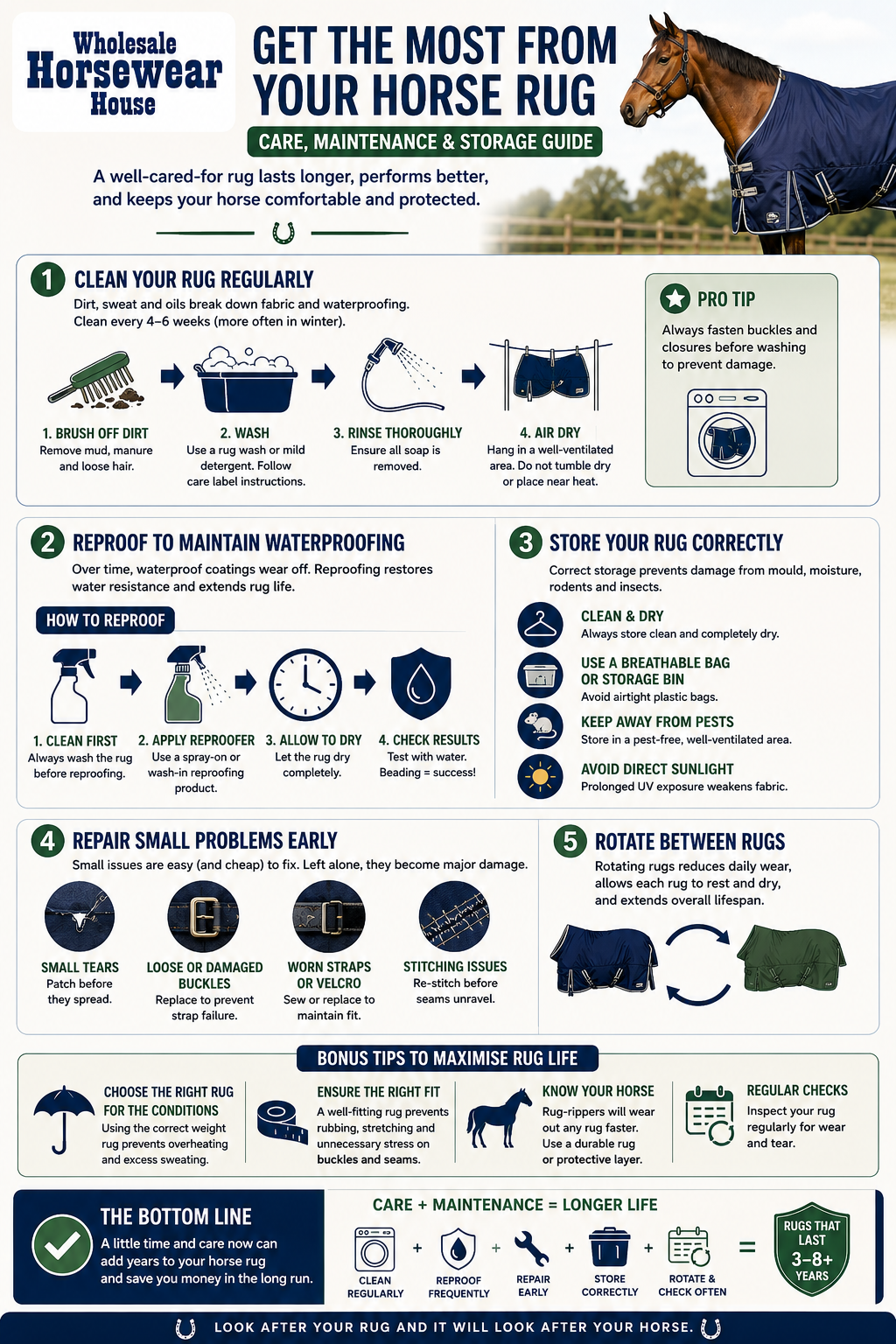
TL;DR — A good-quality synthetic combo in the $150–$300 range routinely lasts 4–6 winters on a paddock horse and 8–10 winters as a stable rug. A canvas jute rug can run 10+ years if it’s dried properly between uses. A $50 online cheap rug rarely makes it through one full season — the shoulder gusset blows out, the chest straps tear loose, and the lining mats. Cost per season tells the real story: a $200 Highlander Quilted Combo at five winters works out at $40 per winter; a $50 online combo at one winter is $50 per winter — and you re-shop every year. Below: what actually drives rug lifespan, and when to repair versus replace.

The 4 things that kill a rug early

We’ve been selling rugs out of our Toowoomba warehouse since 2005, and the rugs that come back to us looking dead almost always died from the same handful of causes. Not bad luck. Not a defective seam. Just four habits that quietly halve the life of an otherwise sound rug.

Wet storage is the biggest one. A rug folded up damp at the end of winter and shoved in a feed shed comes out next autumn with a sour lining, mildewed shell stitching, and waterproofing that’s been quietly eaten by mould spores. Wrong size is the second — an oversized rug rolls sideways every time the horse rolls and grinds the shoulder seam against the ground; an undersized rug stretches every gusset and surcingle to breaking point. Shoulder rub is the wear pattern that comes from a too-shallow shoulder gusset or a rug that’s been allowed to ride forward against the wither. And paddock-mate damage — horses chewing each other’s rugs, pulling at hood straps, tearing at chest gussets — is responsible for almost every torn-in-half rug that comes back to us mid-season.

Get those four under control and the rug itself will do the rest of the work. (We’ve written a separate piece on the chewing problem specifically — Why horses chew their rugs and how to stop it — if that’s the issue you keep running into.)

The lifespan ladder — cheap online versus quality wholesale

Most rug buyers measure cost by the sticker price. That’s the trap. What actually matters is how many winters you get out of the rug before you’re back online buying a replacement. The ladder below is what we see across our customer base — thousands of rugs, twenty years of feedback, working horses and pony-club ponies and old paddock retirees.

The cheap online rug is built to a price point that doesn’t leave room for a deep shoulder gusset, a 1200D ripstop shell, or stitched chest straps that won’t pull through. It looks fine on a website photo and survives a few weeks of mild conditions. The first wet, windy night exposes the seam quality — and the first paddock-mate that grabs the chest strap finishes it. The mid-tier rug ($80–$150 retail) lasts longer because the shell is genuine ripstop and the lining is bonded properly, but the binding and surcingle channels still fail before winter four. The quality wholesale combo — a Highlander Quilted Combo, a Simpson Lined Combo, a Breatha Combo — is where lifespan jumps. Five winters is normal. Six is common if the horse isn’t a chewer.

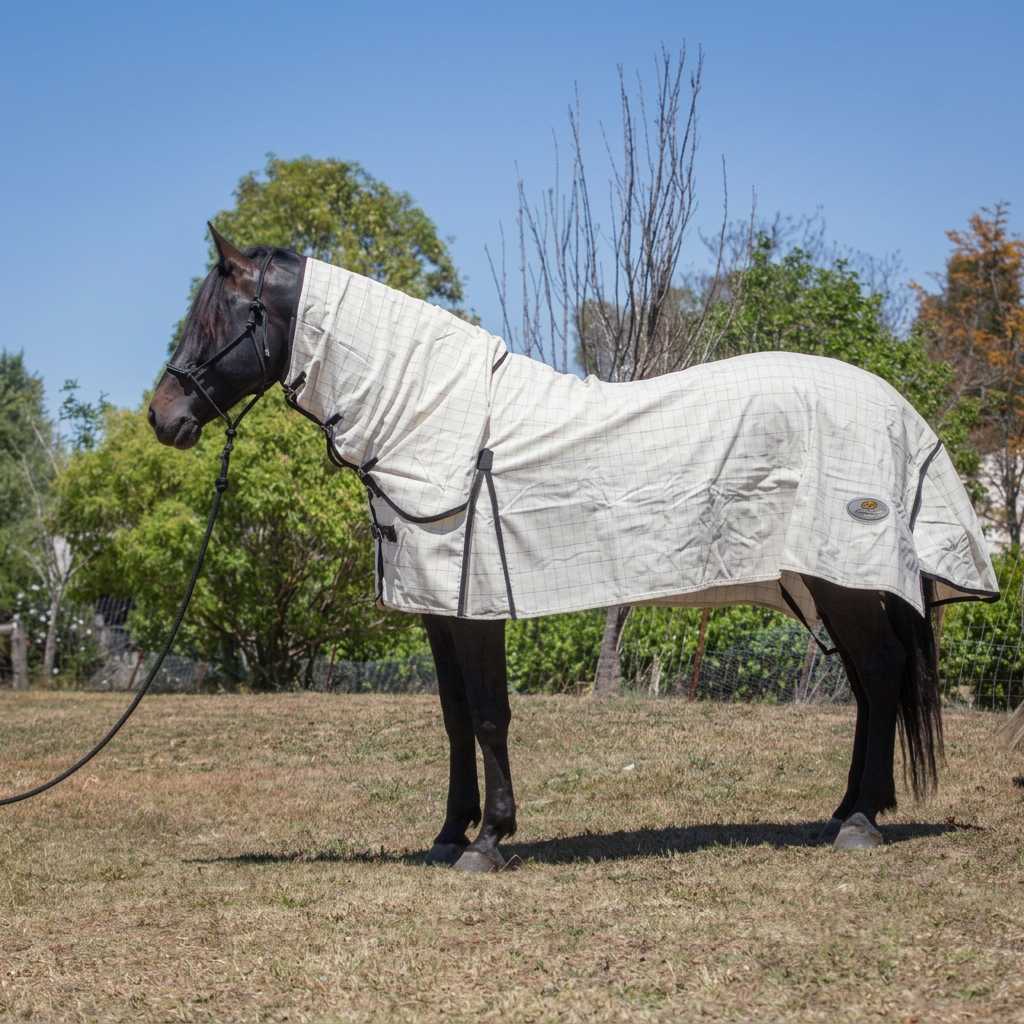
And then there’s the canvas jute rug. The Stradbroke Rug (Jute) and Stradbroke Combo (Jute) use the heritage Aussie jute weave that’s been keeping horses rugged for sixty years. Treat it right, dry it properly, and you’ll be putting that same rug on a horse a decade from now. Stables and trainers have used the Stradbroke pattern for generations because nothing else lasts like it.

What a working club says ★★★★★

“Exceptional horsewear at incredible prices.”

Killarney Polocrosse Club Inc

Killarney, QLD — view on Facebook

Cost per season — the metric that actually matters

This is the calculation almost nobody does — and it’s the only one that tells you whether you’re actually saving money. A $50 rug that lasts one winter costs you $50 per winter. A $200 rug that lasts five winters costs you $40 per winter — and you don’t spend any of those four off-seasons hunting for a replacement on a Sunday night because the shoulder seam blew out at feed time.

Rug cost per season — worked end to end

Sticker price means nothing. Cost per winter is the metric.

Rug option
Upfront cost
Typical lifespan
Cost per winter
Online cheap rug
$50
1 winter
$50
Mid-tier retail combo
$120
2–3 winters
$48
WHWH quality combo
$200
4–6 winters
$40
Canvas jute (Stradbroke)
$220
10+ years
$22

The quality wholesale rug isn’t just cheaper per season — it’s also the rug you actually trust on the horse when the forecast turns nasty. There’s a confidence cost to a cheap rug that doesn’t show up in the spreadsheet: every cold front, you’re out at midnight checking the chest strap. That’s real time, and it’s worth pricing in.

We’ve covered the wholesale-versus-retail question in more detail in our companion piece: Buying horse rugs wholesale vs retail — is it worth it?

Paddock rug vs stable rug — different wear patterns

A paddock rug and a stable rug live very different lives, and they wear out in completely different ways. Knowing which is which tells you how often to replace each one.

A paddock rug takes weather, rolling, mud, dew, frost, paddock-mate teeth, and barbed-wire snags. The shell takes the punishment. A quality 1200D ripstop combo like the Simpson Lined Combo or Aussie Combo is built for that — but four to six winters is the honest expectation. After that the shell starts to wet through, the surcingle channels stretch, and the chest gusset stitching is on borrowed time.

A stable rug — same fill weight, same construction — sees none of that. It lives indoors, the horse isn’t rolling on gravel, no paddock-mate is grabbing the chest strap. Stable rugs from the WHWH range routinely run eight to ten winters before they look tired. The Thermotex Combo is a favourite stable rug for older horses for this reason — it stays therapeutic for years before it’s due for replacement.

Practical implication: if you have one rug doing both jobs, replace it on the paddock-rug schedule. If you have a dedicated stable rug, you can stretch it longer.

Repair before replace — when stitching saves the rug

Plenty of rugs come back to the saddlery looking finished that are absolutely repairable. A blown chest gusset, a torn surcingle channel, even a 20cm shell tear can be stitched if the shell fabric still has structural life in it. The question is whether you’re repairing a one-issue rug or putting band-aids on a rug that’s failing in three places at once.

Repair or replace — three rules of thumb

If you can answer one card’s questions yes, you’re in that camp.

Repair worth it

One issue, shell still sound

  • Single torn chest gusset, no other damage
  • Surcingle channel pulled but not shredded
  • Shell still beads water; lining still dry

Borderline

Multiple small failures

  • Two or three minor seams gone
  • Waterproofing patchy — bead-test failing
  • Rug is 3+ winters old already

Replace

Structural failure

  • Lining sodden — sour smell, can’t dry out
  • Shoulder gusset blown through to the lining
  • Surcingle channel torn from the seam itself

A local saddler will usually charge between $25 and $60 for a single repair — well worth it on a $200 rug that’s only into its second winter. Less worth it on a five-winter-old rug that’s also showing wear in two other places. The right answer is honest: if the rug has one issue and the rest of it’s sound, repair. If three things are failing, you’re paying twice and still ending up with a tired rug.

The Waterproof & Stain Protector spray — adding one to two years

Most rug shells come from the factory with a DWR (durable water repellent) finish that wears off after a couple of winters. Once it’s gone, the shell starts wetting through — the rug looks fine but the horse ends up cold and the lining stays damp. That’s the moment a rug starts feeling old before its time.

A bottle of Waterproof & Stain Protector for horse rugs at the start of each winter restores the DWR and adds genuine years to the rug. Apply it to a clean, dry rug, let it cure twenty-four hours, and the water beads again like the rug was new. We’ve had customers tell us they’ve stretched a Highlander Quilted Combo to seven winters on the back of a yearly re-spray. Five-minute job, $30 bottle, two winters added. Hard to beat.

While we’re on the subject of small things that extend lifespan: replacing a torn surcingle or worn leg straps is a $15–$25 fix that can save a $200 rug. Most surcingles fail before the rug body does. Always worth checking the box of accessories before you give up on the rug.

(See more in Horse Rug Accessories if you need spares.)

When to actually replace — the clear signals

There are four signs a rug is genuinely done and no amount of re-spray or stitching is going to save it. If you spot any of these, retire it.

  • The lining is permanently sodden or smells sour. Once the lining has matted and won’t dry out, the rug is holding moisture against the skin. That’s rain scald and mud fever territory — replace, don’t fight it.
  • The shoulder gusset is blown through to the lining. The shoulder is the highest-stress wear point on the rug. Once it’s open, every roll is grinding dirt into the lining and the gusset can’t be neatly re-stitched.
  • The surcingle channel has torn from the body seam. Not the channel itself — the seam connecting it to the rug body. That’s structural and a repair won’t hold.
  • Bead test failure across the whole shell. Pour a cup of water on a dry shell. If the water soaks straight through in multiple spots, the shell fabric itself has failed. DWR re-spray won’t fix a torn shell membrane.

A rug that ticks one of those boxes is the rug to retire. A rug ticking two or three is overdue. The good news: a quality replacement combo from us at $150–$250 will give you another four to six winters and the calculation starts again.

The maintenance cycle that adds years

Three habits, in three time-windows, that quietly double a rug’s lifespan.

Every week

Quick check

Lift the rug, run your hand under the shoulder and along the spine. Look for damp linings, pressure points, frayed surcingles, chewed chest straps.

Every month

Brush and air

Brush the lining clean. Hang the rug in the sun for half a day. Check stitching on chest gusset, surcingle channels, and tail flap.

End of season

Wash, re-proof, store dry

Cold wash, dry completely, re-spray DWR, store in a sealed bag in a dry shed. Never fold up damp. This is where most rugs are killed.

A long-time customer ★★★★★

“Thank You Wholesale Horsewear House… As a family-run business based in Toowoomba since 2005, they’ve been supplying quality horse equipment, equestrian accessories, and saddlery to riders across Australia.”

Cambooya Pony Club

Cambooya, QLD — view on Facebook

The WHWH promise — built to last

We’re a family-run saddlery at 528 Alderley Street, Toowoomba, founded by Geraldine Lalor in 2005. We design the GTL rug range ourselves and ship Australia-wide. The reason our rugs last is because we’ve had two decades of feedback from working trainers, polocrosse clubs, pony clubs and paddock owners telling us where last year’s rugs failed — and we feed that back into the next season’s build. The shoulder gusset on the current Highlander Quilted is deeper than the 2019 version because of one rancher in Stanthorpe who told us his geldings were rubbing through. Things like that.

If you’re between a cheap online rug and a quality wholesale combo — the maths is on the wholesale combo’s side every time. And if you’re between a synthetic and a canvas jute, read our piece on synthetic vs canvas (jute) horse rugs — jute rugs aren’t for everyone, but for the right horse and the right weather, nothing else comes close.

Buy once. Rug your horse for four to six winters.

Geraldine and the team have been measuring up Australian horses since 2005. Free postage on every order over $500 — phone us and we’ll help you pick the rug that suits your horse, your paddock, and your climate.

Shop Horse Rugs → Call (07) 4613 5599

Related reading

What weight horse rug do I need? An Australian climate guide

The companion piece to this one — matching rug weights to Australian climate zones, BoM map and all.

Synthetic vs canvas (jute) horse rugs — which lasts longer?

If you’re leaning toward the canvas jute end of the lifespan ladder, this is the next read.

Buying horse rugs wholesale vs retail — is it worth it?

The cost-per-season math, taken further: why the wholesale rug at the same retail price lasts longer.

How to measure your horse for a rug (and pick the right size)

Wrong-size rugs die early. This is how to make sure you’re ordering the right one.

Why horses chew their rugs (and how to stop it)

Paddock-mate damage is the #4 rug killer. This piece covers what’s actually happening and what stops it.

Sources

Lifespan figures in this article reflect the typical experience of Australian horse owners across the WHWH customer base and are intended as general guidance for unclipped paddock horses in normal conditions. Individual rugs vary — harsh weather, sustained wet seasons, paddock-mate chewing, and the specific horse’s habits all change the answer. If in doubt about whether a specific rug is worth repairing or replacing, bring it into the store or call us on (07) 4613 5599 and we’ll have a look.
Free Australia Postage

On all orders above $500

Quality Guaranteed

We sell great products

Easy Communication

Phone, FB Messenger, Email

100% Secure Checkout

PayPal / MasterCard / Visa