

If your horse is chewing its rug, it isn’t being naughty—it’s trying to tell you something. In most cases, there are three common causes: boredom, itchy or irritated skin beneath the rug, or another horse in the paddock chewing the rug.
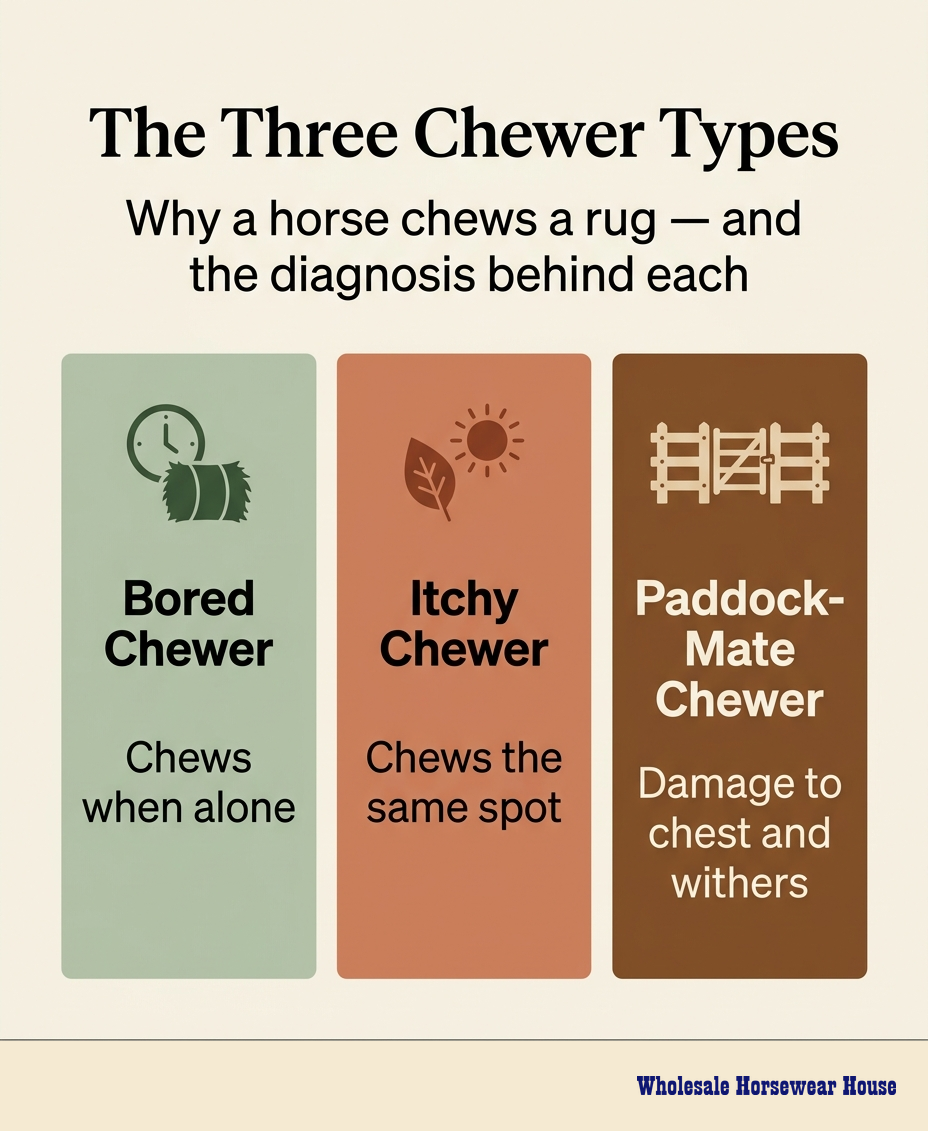
The key is to watch when and where the damage occurs. Does it only happen when your horse is alone? Is the chewing always in the same spot? Are the chest and withers being damaged? These clues will usually point you to the real cause.
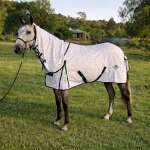
The solution depends on the reason. Bored horses benefit from enrichment and slow feeders. Horses with itchy skin often need a more breathable rug, better grooming, or a veterinary check to rule out skin conditions. If another horse is the culprit, separating them, using a bitter-tasting deterrent spray, or switching to a tougher rug such as the GTL Ripshield Mesh Combo can dramatically reduce the damage.
At Wholesale Horsewear House, we’ve been helping horse owners solve rug problems for years. Every winter we see the same issues come through our Toowoomba store—and these are the solutions that consistently work.
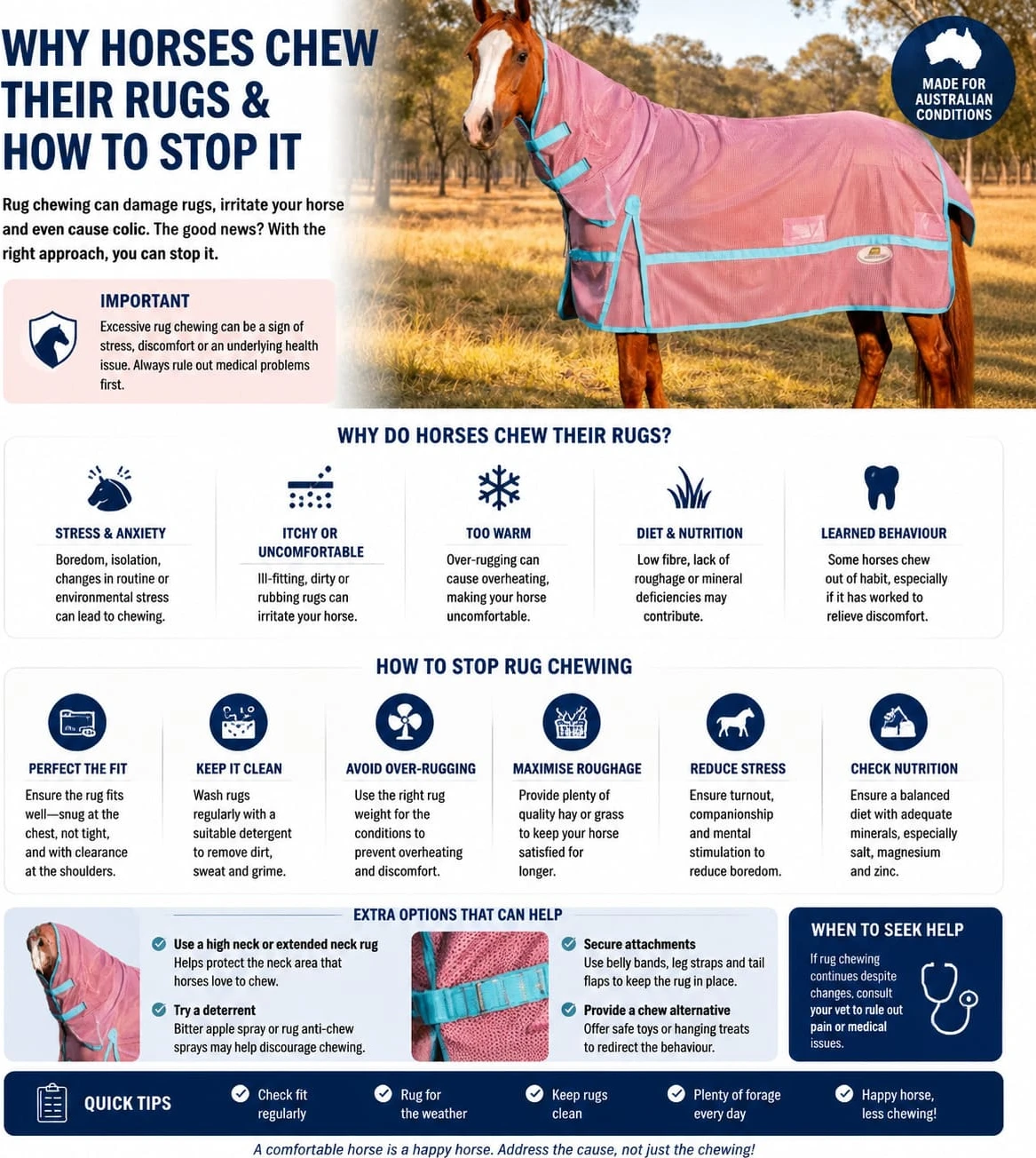
The three reasons horses chew rugs
Walk into our saddlery in autumn carrying a chewed-up rug and the first question we’ll ask is, “Was your horse wearing it when the damage happened, or did you find it chewed after you took it off?” That one answer often tells us almost everything we need to know.
The truth is, rug chewing isn’t one behaviour with one solution. There are three common causes—and each needs a different fix.
1. Boredom
A horse left standing in a paddock with little to do can turn its rug into a toy. With no hay to pick through, no enrichment, and not much happening, chewing becomes a way to pass the time.
Bored horses usually damage the parts they can easily reach, such as the chest straps, belly straps, or the front of the rug. The chewing tends to be scattered rather than focused on one exact spot.
2. Itchy or Irritated Skin
Sometimes the rug isn’t the problem—it’s what’s happening underneath it.
Rain scald, trapped sweat, insect bites, or skin irritation can make a horse desperately itchy. Instead of scratching, they’ll chew at the rug directly over the irritated area. You’ll often notice damage in exactly the same place every time.
When the chewing is consistently localised, it’s worth checking under the rug carefully and speaking with your veterinarian if the skin looks inflamed or sore. Changing to a more breathable rug or adjusting the weight of the rug may also help.
3. Another Horse Is Chewing It
This is the cause many owners never consider.
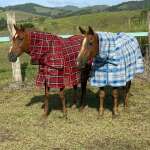
Not every chewed rug was chewed by the horse wearing it. Horses commonly grab and chew each other’s rugs while playing, establishing dominance, or simply out of habit.
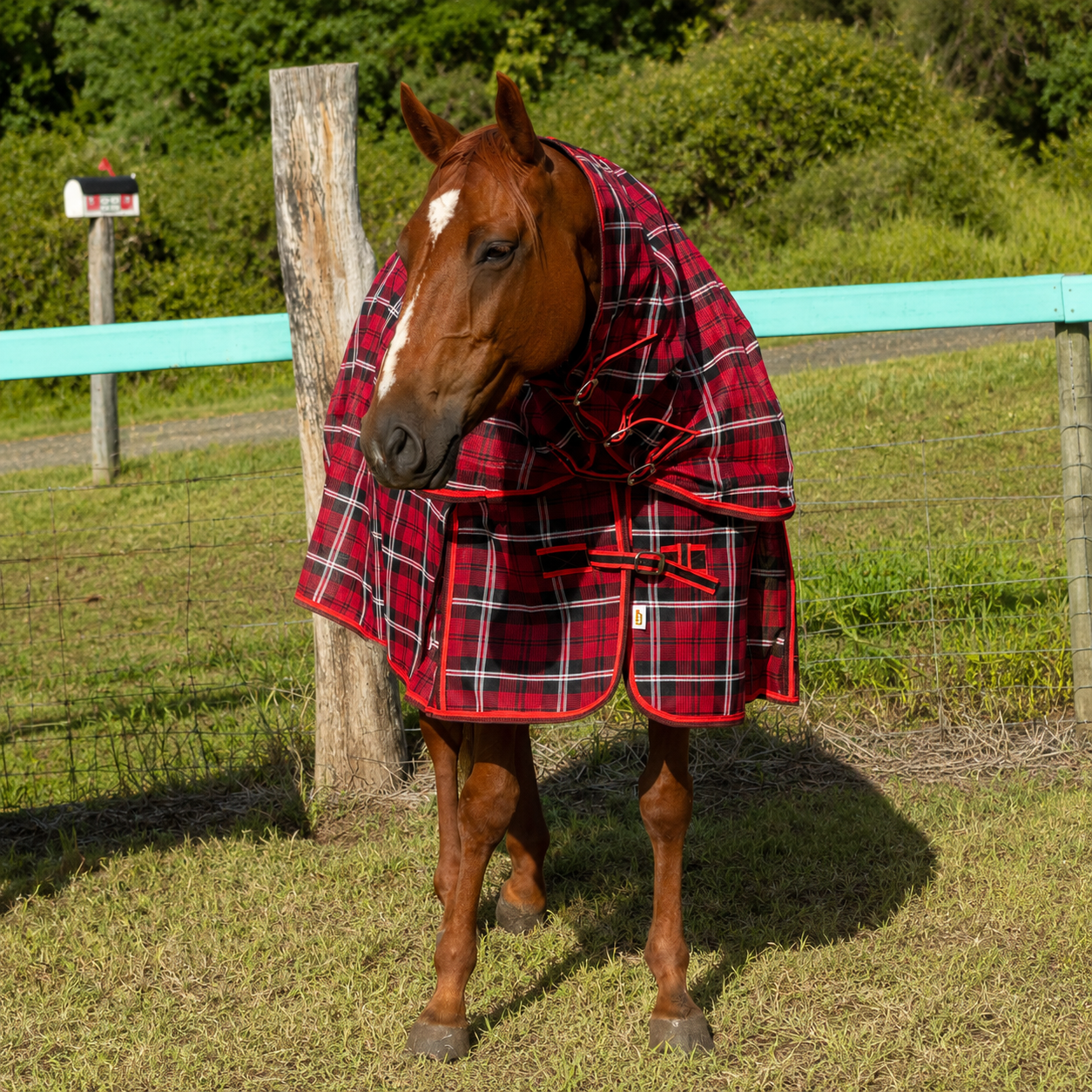
These rugs often have tears across the chest, withers, shoulders, or neck cover—areas that are almost impossible for the horse wearing the rug to reach with its own teeth. If the damage appears in those places, there’s a good chance the guilty party is standing in the next paddock—or the same one.
Getting the Diagnosis Right
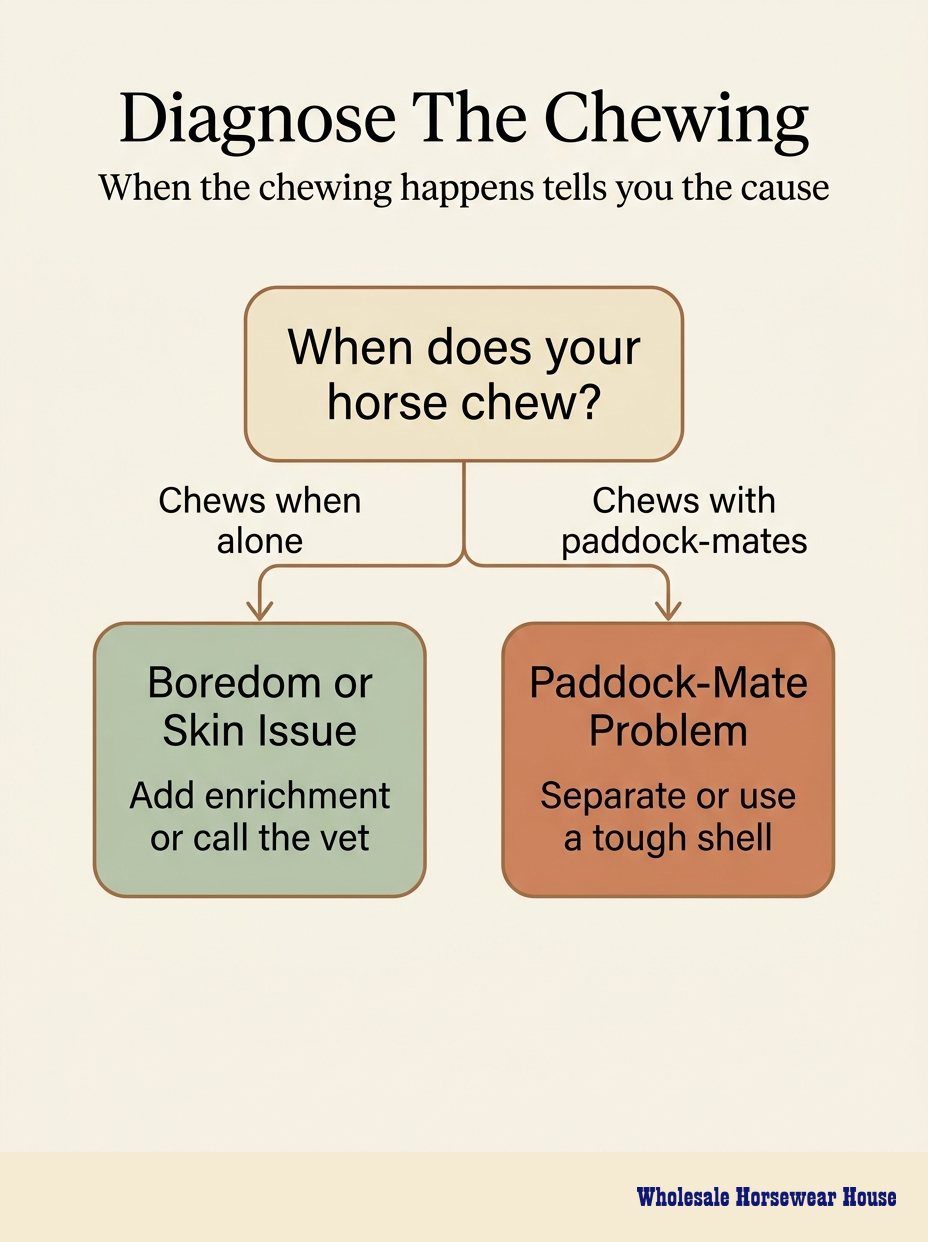
The key is to work out who is doing the chewing and why.
- If the damage is on easy-to-reach areas, boredom is a likely cause.
- If it’s always in the same location, check for skin irritation.
- If the damage is on the chest, withers, or neck cover, another horse may be responsible.
Once you identify the real cause, the solution becomes much simpler. Get it right and you’ll save yourself replacing rug after rug every winter while keeping your horse happier and more comfortable.
Diagnosing yours — the observation checklist
Before you buy another rug, change your horse’s feed, or call the vet, spend three days simply watching what’s happening. Most cases of rug chewing can be diagnosed without spending a dollar—just by observing when the chewing happens and where the damage appears.
Visit the paddock at three different times each day: first thing in the morning, around lunchtime, and again in the evening. You’re looking for patterns rather than one-off events.
Ask yourself:
- Is your horse actually chewing the rug, or is the damage appearing when you’re not there?
- Is the horse standing alone, or beside a paddock-mate that could be chewing it?
- Is the damaged area damp with saliva?
- Does the chewing always occur in the same spot, or is the damage scattered across different parts of the rug?
- Is the damage in a place your horse can physically reach, or is it on the chest, withers, or neck cover where another horse is more likely responsible?
After just a few days, the pattern usually becomes obvious. Once you know when, where, and who is doing the chewing, choosing the right solution becomes much easier—and you’ll avoid wasting money treating the wrong problem.
Three signs, three causes
Match the sign your rug is showing to the column underneath it
Sign 1
Chews the same spot
Repeated damage on one identifiable area — left shoulder, near the wither, low along the belly. The rug is often damp underneath in that spot.
→ Likely itchy
Sign 2
Chews when bored
Damage on whatever his mouth can reach standing still — front buckles, chest straps, belly straps. Worse in a bare paddock with no hay.
→ Enrichment problem
Sign 3
Damage to chest or withers
Tears in spots he physically cannot reach himself. Often happens overnight in shared paddocks. Found on multiple horses in the same group.
→ Paddock-mate
Once you can place the chewing into one of those three categories, the rest of this article will tell you what to do about it.
Fixing the Bored Chewer
The bored chewer is the most common type we see at Wholesale Horsewear House—and fortunately, it’s also the easiest to fix. That’s because the rug usually isn’t the problem. The paddock is.
A bored horse in winter is often short on three things: forage, company, and enrichment. If there’s nothing else to occupy its mouth, the rug becomes the next best option.
Keep Forage Available
The single most effective solution is providing forage for as much of the day and night as possible.
A horse’s digestive system is designed for almost continuous grazing. Long periods without hay create frustration and leave horses looking for something—anything—to chew. Rug straps, chest closures, and belly surcingles often become the victims.
A quality slow-feeder hay net with small openings can keep a horse occupied for hours. As a simple rule, if the hay is gone by 9 pm, your horse is likely to start looking for something else to chew. If there’s still hay left by sunrise, you’ve probably supplied enough to keep them occupied overnight.
Don’t Underestimate Company
Horses are naturally social animals.
A horse living completely alone is far more likely to develop unwanted chewing behaviours than one with companions nearby. Ideally, horses should have paddock mates, but even sharing a fence line with another horse can make a noticeable difference. Some owners also find companion animals such as goats or sheep help reduce boredom.
These aren’t rug solutions—they’re horse management solutions that often stop rug chewing altogether.
Give Them Something They’re Allowed to Chew
Many owners overlook this simple step.
Providing safe, appropriate enrichment gives your horse an outlet for its natural chewing behaviour. Depending on the horse, this might include:
- A salt or mineral lick
- A stable or paddock ball
- Safe horse toys
- A suitable untreated tree branch for chewing
- Plenty of long-stem hay
When horses have acceptable things to chew, the rug often becomes much less interesting.
If chewing has already caused damage, replacing worn surcingles, leg straps, or other hardware is often far cheaper than replacing the entire rug. And if your horse is specifically a tail chewer, products such as the Thrifty Tail Bag can help protect the tail from further damage.
The Bottom Line
The bored chewer rarely needs a tougher rug.
More often, the answer is simple: more hay, more company, and more appropriate things to chew. Fix those three areas, and many horses stop chewing their rugs altogether.
The Itchy Chewer: When It’s Time to Call the Vet
Unlike the bored chewer, the itchy chewer is remarkably predictable.
They don’t chew random straps or buckles—they chew the same spot, over and over again. That’s because they’re trying to reach skin that’s irritated beneath the rug.
If your horse is repeatedly damaging one specific area, take the rug off and inspect the skin carefully. In many cases, you’ll find one of these common culprits.
Rain Scald
Rain scald is a bacterial skin infection that often appears as small scabby patches along the back and topline. It develops when the skin stays damp for extended periods, particularly under rugs that don’t allow moisture to escape.
If your horse’s coat is consistently damp every time you remove the rug, the rug isn’t causing the infection—but it may be preventing the skin from drying and recovering.
Sweet Itch
Also known as Queensland itch or summer itch, sweet itch is an allergic reaction to bites from Culicoides midges.
It most commonly affects the mane, tail, and belly, but severely affected horses may chew at any part of the rug they can reach in an attempt to relieve the irritation.
Overheating Under a Heavy Rug
This is one of the most overlooked causes of rug chewing.
A rug that’s too warm for the conditions can cause an unclipped horse to sweat, even during a mild Toowoomba winter. Moisture becomes trapped against the skin, creating the perfect environment for rubbing, irritation, and discomfort.
The RSPCA Knowledgebase notes that many Australian horses are over-rugged rather than under-rugged. Choosing an appropriate rug weight for the weather is often more important than adding extra warmth.
What To Do Next
If the chewing is localised and repeated, resist the temptation to simply replace the rug.
Instead:
- Remove the rug and inspect the skin.
- Contact your veterinarian if you find scabs, sores, swelling, or signs of infection.
- Avoid re-rugging until you’ve identified the cause of the irritation.
- Once the skin issue is under control, reassess your rug choice.
For horses prone to sweating during milder weather, a lightweight, highly breathable rug such as the GTL Ripshield Mesh Combo can help improve airflow while still providing protection. In many cases, simply reducing the fill weight is enough to prevent the problem from returning.
If your horse has particularly sensitive skin, our guide to Best Horse Rugs for Sensitive-Skinned Horses explains which fabrics are least likely to cause rubbing and irritation. If you’re unsure whether your horse is wearing the right rug weight, our guide to What Weight Horse Rug Does My Horse Actually Need? will help you choose the most suitable option for the conditions.
The Paddock-Mate Chewer: Separation and Smarter Rug Choices
This is the cause that catches many horse owners by surprise.
The damage looks as though the horse has chewed its own rug—but when you look closely, the torn areas are somewhere the horse simply can’t reach. Across the chest, over the withers, or along the front of the neck cover are all classic signs that another horse is responsible.
If two or more horses share a paddock and only one or two rugs are being destroyed, the culprit is often the youngest, the most playful, or the most dominant horse in the group. In many cases, it isn’t true aggression at all—it’s boredom, curiosity, or rough play that has turned another horse’s rug into entertainment.
What Works
There are three proven ways to reduce paddock-mate rug damage, and they often work best when combined.
Separate Horses Overnight
If the damage only appears overnight, try separating the horses after evening feed.
Keeping them together during the day but in separate yards or stables overnight is often enough to break the habit without permanently changing the herd dynamics.
Choose a More Durable Rug
If separation isn’t practical, a rug with a stronger outer shell can make a significant difference.
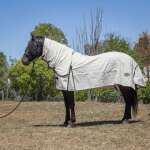
At Wholesale Horsewear House, we often recommend the GTL Ripshield Mesh Combo OR the PVC Shadecloth Combo for horses sharing paddocks with persistent rug chewers. Its ripstop mesh construction is designed to better withstand snagging and tearing, helping extend the life of the rug when another horse decides to grab hold.
Protect the High-Risk Areas
The chest and shoulders usually take the first bite.
A Quilted Bib or Satin Bib worn underneath the rug helps protect these high-wear areas from both chewing damage and the rubbing that often follows. Many owners don’t notice the skin irritation until they remove the rug, so preventing friction before it starts is well worth considering.
When It’s More Than Play
Most paddock-mate chewing is simply rough play or boredom.
However, if one horse is repeatedly pulling rugs off, breaking buckles, chasing other horses, or causing bite wounds, the issue goes well beyond rug damage. In these cases, permanent separation may be the safest option, and it’s worth discussing the behaviour with your veterinarian or an experienced equine behaviourist.
The goal isn’t just protecting your rugs—it’s protecting the welfare of every horse in the paddock.
Anti-Chew Sprays and Bittering Agents
Anti-chew sprays can be an effective tool—but they should never be the only solution.
Commercial bittering sprays, including capsaicin-based and other “chew stop” formulations, work by making the rug taste unpleasant. Applied to high-risk areas such as the chest straps, front buckles, and neck opening, they can quickly discourage horses from returning to the same spots. Most horses learn after only a few encounters that the rug isn’t worth chewing.
For the best results, reapply the spray regularly, particularly to the areas that receive the most attention.
Remember: Treat the Cause, Not Just the Symptom
A bittering spray won’t cure boredom, skin irritation, or a mischievous paddock mate.
If a bored horse decides its own rug no longer tastes appealing, it may simply start chewing fence rails, gates, feed bins, or another horse’s rug instead. Likewise, an itchy horse will continue trying to relieve the irritation until the underlying skin problem is addressed.
Think of anti-chew sprays as the finishing touch to a good management plan—not the management plan itself.
Reapply After Wet Weather
Rain, dew, and regular wear gradually reduce the effectiveness of most anti-chew products.
After heavy rain, it’s a good idea to inspect the rug and reapply the spray where needed. Treating the rug with a waterproof and fabric protector can also help the outer fabric repel moisture and may extend the life of each application.
Avoid Homemade Remedies
It can be tempting to mix up homemade deterrents using chilli, vinegar, or other household ingredients, but these are best avoided.
Concentrated chilli or capsaicin can irritate sensitive skin—particularly if your horse is already suffering from an underlying skin condition. Vinegar and other DIY mixtures may also damage some rug fabrics or cause unnecessary discomfort.
Instead, choose a commercial anti-chew product that has been formulated specifically for horses and follow the manufacturer’s application instructions.
Used correctly, anti-chew sprays can be an excellent way to reinforce good management—but lasting success always comes from identifying why the horse is chewing in the first place.
Fix the cause, not just the rug — quick and long-term
Every diagnosis has a short-term fix you can apply this week and a long-term fix you should plan for over the season. Replacing a chewed rug without addressing the cause guarantees the new rug ends up the same way.
What to do, by cause
The quick fix is this-week; the long-term fix is this-season
WHWH products that hold up — chew-resistant choices
If you’ve diagnosed the cause and you’ve done the management work, the rug itself becomes the final piece of the puzzle. Some shells are simply tougher under tooth than others — not chew-proof (nothing is), but chew-resistant enough that one bored afternoon doesn’t cost you a rug. From the GTL range at Wholesale Horsewear House, these are the ones we steer chewer-owners toward most often.
Three picks for the chewer-owner
A tough shell, a chest protector, and a heavy traditional combo
The Tough Shell
Ripshield Mesh Combo
Ripstop mesh that resists tearing under tooth-snag and the bites of a paddock-mate. Light and breathable — the right pick for warm-weather chewers and shoulder-season turnout.
The Chest Protector
Bib (Quilted or Satin)
Worn under the rug to shield the chest and shoulders from a paddock-mate’s teeth and from the rub a chewed rug leaves behind. Cheap insurance for the wearer.
The Heavy Traditional
Aussie Combo & Husky Combo
Heavy canvas combos for cold-paddock chewers in the frost belt. Traditional outer fabric, built to last seasons — the rug that’s outlived the chewing phase for thousands of GTL customers.
That “through the winter months” line is the one we hold onto. A rug that lasts a whole winter under a working show team also lasts a whole winter under a bored paddock chewer — once you’ve dealt with the boredom.
Related reading
What weight horse rug do I need? An Australian climate guide
Most rug chewing tied to itch traces back to an overweight rug for the climate. Start here if you suspect over-rugging is part of your chewer’s problem.
How long does a quality horse rug last?
A well-built GTL combo lasts four to six winters on a paddock horse — if the horse isn’t actively destroying it. Companion piece on what shortens a rug’s life and what extends it.
Best horse rugs for sensitive-skinned horses
If your diagnosis points to the itchy chewer, this is the next read — fabric choices and fill weights for horses whose skin reacts to everything.
Rug vs combo: when do you actually need the neck cover?
Paddock-mate chewers cause most of their damage on the neck cover. The neck-vs-no-neck call is a real one for chewer-paddock owners — this piece walks through both sides.
Sources
- RSPCA Australia Knowledgebase — horse welfare and rugging guidance
- Equestrian Australia — peak national equestrian body, welfare resources
- Australian Horse Industry Council — national industry body
- Horse SA — state horse industry body, horse owner care resources
- University of Sydney School of Veterinary Science — equine welfare research
- University of Queensland Veterinary Science — equine behaviour and skin condition research
Guidance in this article reflects the typical experience of Australian horse owners across the WHWH customer base and is intended as general information for unclipped horses in normal body condition. Rug chewing tied to persistent skin irritation, aggressive paddock-mate behaviour, or compulsive oral stereotypies should be assessed by your equine vet or an experienced horse behaviourist. If in doubt about your specific horse, speak with your vet or call us on (07) 4613 5599 and we’ll talk you through it.